Downloading QuickBooks Desktop is only the first step. Choosing the correct edition, preparing Windows or Mac, installing the software properly, activating your subscription, and configuring company-file access are equally important.
A failed installation can result in messages such as QuickBooks Error 1603, Error 1904, Error 1935, Error 1402, Error 1722, QuickBooks won’t open, installation freezes, activation failures, or multi-user connection problems. In many cases, the underlying problem is not the company file itself but an incomplete installation, insufficient permissions, damaged Windows components, security software interference, or an incompatible system configuration.
This guide provides a practical walkthrough for users searching for QuickBooks Desktop download, QuickBooks installation help, QuickBooks Pro installation, QuickBooks Enterprise setup, and solutions for common installation errors.
The goal is simple: download the appropriate software, install it correctly, protect your company data, and get your accounting environment ready for daily use.
What Is a QuickBooks Desktop?
QuickBooks Desktop is locally installed accounting software designed for businesses that need accounting, invoicing, reporting, payroll-related functionality, inventory management, and other financial workflows.
Unlike a browser-based accounting application, the Desktop application is installed directly on a Windows or Mac computer. Depending on the edition and setup, company files can be stored locally or accessed through a properly configured network environment.
Before downloading anything, determine:
- Which QuickBooks edition you need
- Which year or release you are licensed for
- Whether you are using Windows or Mac
- Whether you need single-user or multi-user access
- Whether payroll services are required
- Whether you are installing on a workstation or server
- Whether you are upgrading from an older version
Choosing the wrong installer can create unnecessary activation, compatibility, or company-file problems.
Before You Download QuickBooks Desktop
A few minutes of preparation can prevent hours of troubleshooting.
1. Identify Your QuickBooks Version
If QuickBooks is already installed, open the program and press F2 to display the Product Information window.
Record:
- Product name
- Product year
- Version
- License information
- Product number
- Installation location
If the existing program will not open, check your purchase records or account information for the product details.
2. Determine Your Operating System
Before downloading the installer, verify whether you are using:
- Windows
- macOS
Do not attempt to install a Windows edition on a Mac or use a Mac installer on Windows.
3. Check Your Computer
Verify that your computer has sufficient:
- Processor capacity
- RAM
- Available storage
- Screen resolution
- Operating-system compatibility
- Internet connectivity
The exact requirements can vary by product year and edition, so users should verify the requirements applicable to their specific release before installation.
4. Back Up Your Company File
If you are upgrading or reinstalling an existing installation, create a backup before making major changes.
A local backup gives you a recovery option if an installation problem, hardware failure, or unexpected file issue occurs.
How to Download QuickBooks Desktop
Step 1: Choose the Correct Product
Before downloading, identify whether you are working with:
- QuickBooks Pro
- QuickBooks Premier
- QuickBooks Enterprise
- QuickBooks Accountant
- QuickBooks Desktop for Mac
Product availability and subscription options can change over time, so always use the product associated with your license or subscription.
Step 2: Select the Correct Year
QuickBooks Desktop products are commonly identified by their product year.
Installing a different year from the one associated with your company file can create compatibility or upgrade considerations.
If you are replacing an existing installation, record the current product year before removing it.
Step 3: Download the Installer
Use the appropriate official software download provided for your licensed product.
Avoid downloading installers from unknown third-party websites. An installer from an unreliable source may be outdated, incomplete, modified, or incompatible with your license.
Step 4: Save the Installer
Save the installation file somewhere easy to find, such as your Downloads folder.
Do not rename the installer unnecessarily.
Before launching it, confirm that:
- The download completed
- The file is not partially downloaded
- You have administrator access
- Other installations are not running
How to Install QuickBooks Desktop on Windows
Once the installer has downloaded, follow these steps.
Step 1: Close Other Applications
Close unnecessary applications before starting the installation.
If you are reinstalling QuickBooks, make sure the existing QuickBooks application is completely closed.
Step 2: Start the Installer
Locate the downloaded installation file and double-click it.
If Windows displays a User Account Control prompt, confirm that you want to allow the installer to make changes.
For permission-related problems, you can right-click the installer and choose Run as administrator.
Step 3: Accept the License Agreement
Read the license agreement and accept the terms to continue.
Step 4: Enter License Information
When requested, enter the license and product information associated with your software.
Keep these details available throughout the installation process.
Step 5: Choose an Installation Type
Depending on your environment, you may see options for different installation configurations.
Express Installation
This is generally appropriate for a computer where QuickBooks will be used independently.
Custom and Network Options
This option is more appropriate when configuring:
- Multi-user access
- A server
- A network environment
- A shared company-file configuration
Select the configuration that matches your actual setup rather than choosing an option simply because it is faster.
Step 6: Complete the Installation
Allow the installer to copy the required program files.
Do not shut down the computer or terminate the installer while installation is in progress.
After completion, restart Windows if prompted.
How to Install QuickBooks Desktop for Mac
Mac users need the Mac-compatible edition of the software.
Step 1: Locate the Installation File
Find the downloaded .dmg installation file.
Double-click it to open the installer.
Step 2: Install the Application
Follow the installation instructions displayed on the screen.
In a typical Mac installation, the QuickBooks application is moved into the Applications folder.
Step 3: Open QuickBooks
Open the Applications folder and launch QuickBooks.
If macOS displays a security prompt, verify that you are opening the expected application.
Step 4: Activate the Product
Enter the required license or account information when prompted.
Step 5: Open or Create a Company File
After activation, open an existing compatible company file or create a new one.
Before migrating or converting a company file between platforms or product versions, create a reliable backup.
How to Activate QuickBooks Desktop
Installing the program does not necessarily complete the setup.
Activation confirms that the software is associated with the appropriate license or subscription.
A typical activation process involves:
- Open QuickBooks Desktop.
- Sign in when prompted.
- Enter the required license information if requested.
- Follow the activation instructions.
- Confirm that the product is activated.
- Restart QuickBooks if required.
If activation fails, check:
- Internet connectivity
- System date and time
- License information
- Product year
- Account credentials
- Firewall or security restrictions
Do not repeatedly enter random license information. Confirm the correct product details first.
QuickBooks Desktop Multi-User Installation
Businesses with multiple users require additional planning.
A multi-user environment generally involves:
- A host computer or server
- Workstations
- Database services
- Shared company-file folders
- Appropriate Windows permissions
- Firewall configuration
- QuickBooks Database Server Manager
Step 1: Install the Appropriate Components
During installation, select the configuration appropriate for hosting or accessing company files.
Step 2: Configure the Company-File Folder
Store the company file in a folder that the required users and QuickBooks database service can access.
Avoid placing active company files in locations that are unsuitable for continuous multi-user access.
Step 3: Configure Database Server Manager
Database Server Manager helps QuickBooks work with company files stored on a network.
After installation, scan the appropriate folders so the database service can recognize the company files.
Step 4: Verify Hosting
On the host computer, check the QuickBooks hosting settings.
If the system should host the company file, verify that multi-user hosting is enabled appropriately.
Step 5: Connect Workstations
On each workstation:
- Open QuickBooks.
- Select the option to open or restore a company.
- Browse to the shared company-file location.
- Open the company file in the appropriate mode.
- Test access with multiple users.
If users encounter H-series network errors, investigate hosting, firewall, folder permissions, database services, and network configuration.
Common QuickBooks Desktop Installation Errors
A failed installation does not always mean that the installer itself is defective.
Several Windows components and security settings can interfere with installation.
QuickBooks Error 1603
Error 1603 commonly appears during installation or update operations.
Potential causes include:
- Windows Installer problems
- Missing components
- Permission restrictions
- Damaged installation files
QuickBooks Error 1904
Error 1904 can occur when a required component or file cannot be registered correctly.
Potential causes include:
- Damaged Windows components
- Permission problems
- Microsoft component issues
- Incomplete installation
QuickBooks Error 1935
Error 1935 can be associated with problems involving Windows system components required during installation.

QuickBooks Error 1935: Proven Solutions for Windows Assembly and Installation Problems
Check Windows updates and repair relevant system components before repeatedly reinstalling the accounting software.
QuickBooks Error 1402
Error 1402 can involve Windows registry permissions or access problems.

QuickBooks Error 1402 showing “Could Not Open Key” during installation or update
Running the installer with appropriate administrator privileges and repairing Windows installation components may help.
QuickBooks Error 1722
Error 1722 may occur when an installation process or Windows installer operation cannot complete successfully.
Restarting Windows, repairing installation components, and using available diagnostic utilities can help identify the cause.
QuickBooks Tool Hub for Installation Problems
QuickBooks Tool Hub can be useful when the Desktop application has installation, program, or network problems.
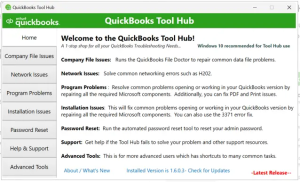
Depending on the issue, available utilities may include:
- Quick Fix My Program
- QuickBooks Install Diagnostic Tool
- QuickBooks File Doctor
- Program repair utilities
- Network troubleshooting tools
For Installation Errors
Open the Tool Hub and use the installation troubleshooting section when available.
The QuickBooks Install Diagnostic Tool can help address certain installation-related problems involving Windows components.
For Program Problems
If QuickBooks installed successfully but will not launch, Quick Fix My Program may help stop background processes and repair certain program-level problems.
For Company-File Problems
If the program opens but a company file cannot be accessed, company-file troubleshooting may be more appropriate than reinstalling the entire application.
This distinction is important: do not reinstall QuickBooks simply because a company file is damaged or inaccessible.
Why QuickBooks Won’t Install
Several conditions can interrupt installation.
1. Insufficient Permissions
Windows may prevent the installer from modifying protected directories.
Try: Run the installer as administrator.
2. Damaged Installation File
A corrupted download may fail during installation.
Try: Remove the incomplete installer and obtain a fresh copy.
3. Existing QuickBooks Processes
Background processes can prevent files from being replaced.
Try: Close QuickBooks and restart Windows before reinstalling.
4. Security Software
Antivirus or endpoint-security software can sometimes interfere with installation.
Try: Review security logs and configure appropriate exclusions according to your security policy.
Avoid permanently disabling security protection.
5. Windows Component Problems
Missing or damaged Windows components can prevent installation.
Try: Install pending Windows updates and use appropriate Windows repair tools.
6. Insufficient Storage
Low disk space can interrupt installation or updates.
Try: Free sufficient storage before beginning
QuickBooks Installation Troubleshooting Checklist
If installation fails, work through these steps systematically.
Basic Checks
- Restart the computer.
- Confirm administrator access.
- Close QuickBooks.
- Close other installers.
- Check available storage.
- Confirm the operating system is supported.
- Verify the installer matches your product.
- Run the installer as administrator.
If the Problem Continues
- Check Windows updates.
- Run the appropriate QuickBooks diagnostic utility.
- Review antivirus or firewall interference.
- Repair the existing installation if the option is available.
- Perform a clean installation when standard repair methods fail.
A clean installation should generally be treated as an advanced troubleshooting step rather than the first solution.
When Should You Perform a Clean Installation?
A clean installation may be appropriate when:
- QuickBooks repeatedly crashes
- Installation errors continue after repair
- Program files are damaged
- Updates repeatedly fail
- The existing installation cannot be repaired
- Previous installation remnants interfere with a new installation
Before performing a clean installation:
- Back up company files
- Record license information
- Confirm your product year
- Close QuickBooks
- Make sure you have the correct installer
- Understand which folders will be renamed or removed
Remember that program files and company files are not the same thing. Nevertheless, always create a backup before performing major installation work.
Protect Your Company File During Installation
Your company file contains critical financial information, so installation work should be performed carefully.
Before upgrading or reinstalling:
Create a Backup
Keep a separate backup in a secure location.
Verify the Backup
Do not assume a backup is usable simply because the backup operation is completed. When practical, verify that the backup can be accessed or restored.
Record Important Information
Keep copies of:
- License information
- Product information
- Company-file location
- Payroll service details
- User credentials
- Network configuration information
Avoid Moving Active Company Files Randomly
Changing the location of a company file without considering network configuration can create additional access problems.
QuickBooks Desktop Download and Installation Best Practices
For a smoother setup, follow these practices:
| Best Practice | Why It Matters |
| Use the correct installer | Prevents product and compatibility conflicts |
| Check system requirements | Reduces installation failures |
| Back up company files | Protects financial data |
| Run with appropriate permissions | Prevents access-related failures |
| Keep Windows updated | Supports required system components |
| Close background programs | Prevents file conflicts |
| Check security software | Reduces installation interference |
| Use the correct product year | Helps avoid compatibility problems |
| Configure multi-user access carefully | Prevents network errors |
| Keep installation information | Makes future repairs easier |
QuickBooks Desktop Download — Common Questions
1. Where should I download QuickBooks Desktop?
Use the appropriate official download source associated with your QuickBooks product, subscription, or licensed account. Avoid unknown third-party download sites.
2. Can I install QuickBooks Desktop on a new computer?
Yes, provided the computer meets the applicable system requirements and you have the appropriate product license or subscription information.
After installation, you can move or restore your company file using a suitable backup or supported migration process.
3. Can I install QuickBooks Desktop without my license information?
The installation may begin without all licensing details, but activation generally requires valid product or account information.
Locate your license information before starting a major reinstall.
4. Why won’t QuickBooks Desktop install?
Possible reasons include incompatible Windows versions, insufficient permissions, damaged installation files, missing Windows components, security software interference, insufficient storage, or an existing damaged installation.
5. What should I do if QuickBooks Error 1603 appears?
Start by checking administrator permissions, Windows components, available updates, and the installation environment. The QuickBooks Install Diagnostic Tool can also be useful for certain installation problems.
6. What should I do if Error 1904 appears?
Check Windows components, permissions, and the QuickBooks installation environment. If basic troubleshooting fails, use the appropriate installation diagnostic tools before attempting a complete reinstall.
7. Can I install QuickBooks Desktop on a Mac?
Yes, but you need the Mac-compatible product rather than the Windows edition. Product availability and supported macOS versions can vary by release.
8. How do I install QuickBooks Desktop for multiple users?
Use the appropriate network installation configuration, configure the database service on the host computer, scan the company-file folder, verify permissions, and connect workstations to the shared company-file location.
9. Will reinstalling QuickBooks delete my company file?
A normal program uninstall does not intentionally remove the company file. However, because company files are valuable financial records, always create a backup before uninstalling, repairing, or performing a clean installation.
10. Should I uninstall QuickBooks before installing a newer version?
Not necessarily. The appropriate approach depends on the product year, upgrade path, licensing arrangement, and whether the existing installation is functioning properly.
11. Why does QuickBooks install but refuse to open?
The problem may involve damaged program components, background processes, permissions, Windows components, or security software. Try program-repair utilities before immediately reinstalling.
12. Can QuickBooks Tool Hub fix installation errors?
Tool Hub includes troubleshooting utilities designed for certain program and installation problems. The appropriate utility depends on the specific error.
Expert Tips for a Successful QuickBooks Installation
From a troubleshooting perspective, the biggest mistake users make is treating every installation problem as the same issue.
A better approach is to identify where the failure occurs.
If the download fails
Investigate:
- Internet stability
- Browser download problems
- Storage
- Security software
- Installer integrity
If installation fails
Investigate:
- Windows permissions
- Windows components
- Existing program files
- Security restrictions
- Product compatibility
If activation fails
Investigate:
- License information
- Account credentials
- Internet connectivity
- System date and time
- Product version
If QuickBooks opens but the company file does not
Do not immediately reinstall.
Investigate:
- Company-file location
- File permissions
- Network configuration
- Company-file damage
- .ND and .TLG files
- Database Server Manager
- Hosting configuration
If multi-user mode fails
Investigate:
- Host configuration
- Database services
- Firewall
- Shared-folder permissions
- Network connectivity
- Database Server Manager
This diagnostic approach prevents unnecessary reinstalls and helps protect your accounting data.
Final Takeaway
Download QuickBooks Desktop is straightforward when you start with the correct product, compatible operating system, valid licensing information, and a reliable installation environment.
The safest installation process is to identify your product first, check compatibility, back up your company file, obtain the correct installer, install with appropriate permissions, activate the software, and then configure your company file or multi-user environment.
When problems occur, avoid jumping directly to a complete reinstall. Determine whether the issue involves the installer, Windows, activation, program files, company data, or network configuration. Tools such as QuickBooks Tool Hub can help with certain installation and program problems, while advanced cases may require a repair or clean installation.
Most importantly, protect your company data before making significant changes. A properly prepared installation is much easier to troubleshoot and significantly reduces the risk of unnecessary disruption to your accounting workflow.
Need Help With QuickBooks Desktop Installation?
If you cannot download, install, activate, update, or configure QuickBooks Desktop after following the troubleshooting steps above, the Data Service Team can help diagnose the underlying issue.
Our team assists with installation problems, company-file access, multi-user configuration, update failures, data-related issues, and other Desktop troubleshooting requirements.
Data Service Team Contact Number: +1-(888)-718-7888