In today’s digital-first business environment, organizations generate enormous volumes of data every second. From customer interactions and online transactions to IoT devices and cloud applications, data has become one of the most valuable assets for businesses. However, collecting and managing this data efficiently is not always simple. Many organizations struggle with storage, integration, security, and performance-related issues that affect business intelligence and decision-making.
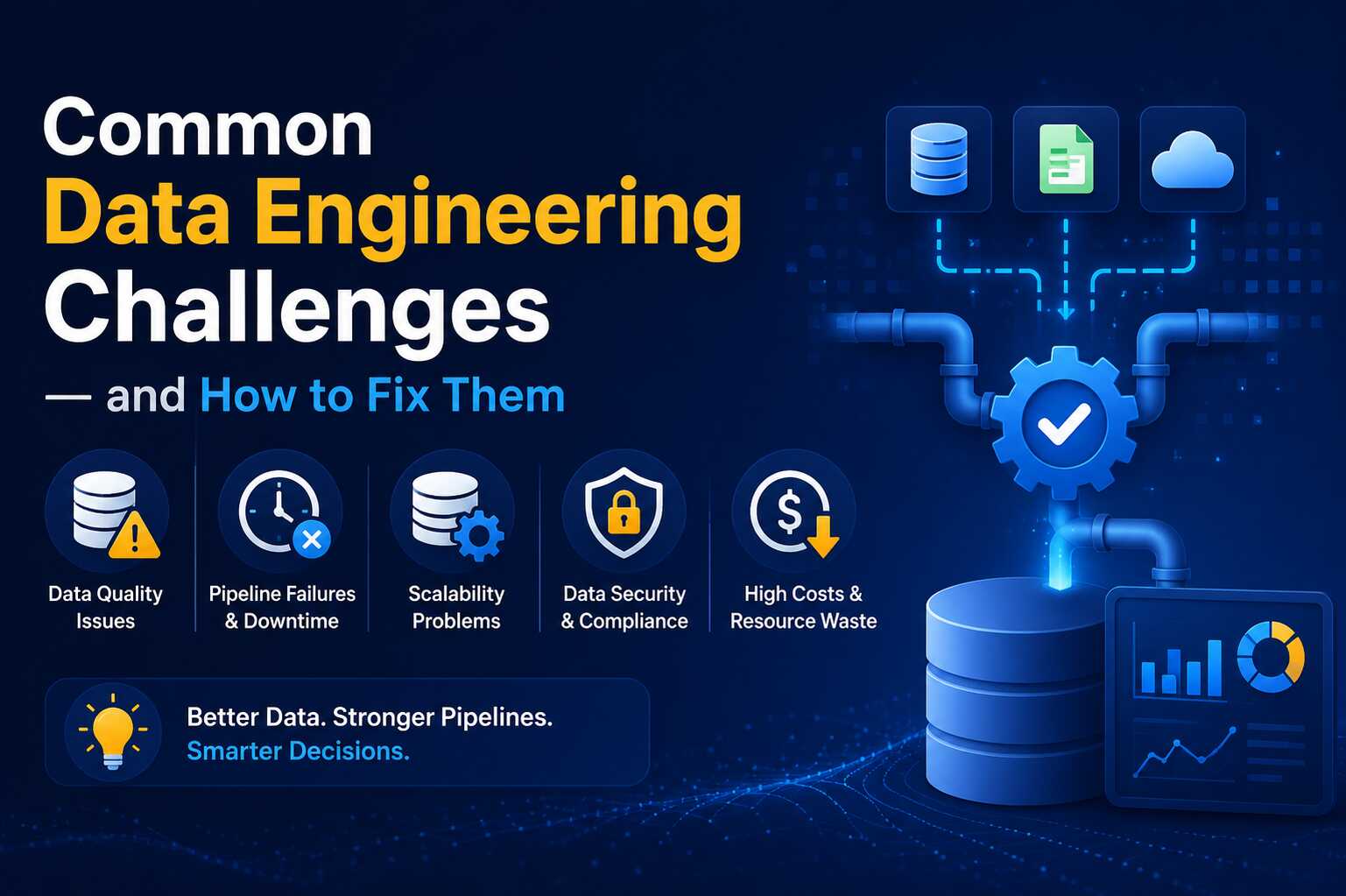
This is where modern data engineering services play a crucial role. They help businesses build scalable data pipelines, maintain high-quality datasets, and ensure seamless data processing across systems. Understanding the most common data engineering challenges and learning how to solve them can help enterprises maximize the value of their data infrastructure.
1. Managing Massive Volumes of Data
One of the biggest challenges companies face is handling rapidly growing data volumes. Businesses often collect structured, semi-structured, and unstructured data from multiple sources, making storage and management increasingly complex.
How to Fix It
Organizations should adopt scalable cloud-based data architectures such as data lakes and data warehouses. Platforms like AWS, Azure, and Google Cloud offer flexible storage solutions that grow with business requirements.
Using distributed processing tools like Apache Spark and Hadoop also helps organizations process large datasets efficiently without affecting performance. Professional Data engineering services can help design optimized architectures that ensure long-term scalability and reliability.
2. Poor Data Quality
Data quality issues such as duplicate records, missing values, incorrect formatting, and outdated information can severely impact analytics and reporting. Poor-quality data leads to inaccurate business decisions and reduced operational efficiency.
How to Fix It
Businesses should implement automated data validation and cleansing processes. ETL (Extract, Transform, Load) pipelines can standardize and clean incoming data before it enters analytics systems.
Data governance frameworks are equally important for maintaining consistency across departments. Regular audits, validation checks, and monitoring tools help maintain accurate and reliable datasets over time.
3. Data Integration from Multiple Sources
Modern businesses use multiple applications and platforms, including CRMs, ERPs, marketing tools, cloud databases, and third-party APIs. Integrating all these systems into a unified platform is often challenging.
How to Fix It
Using modern integration tools and APIs simplifies the process of consolidating data from different sources. Data engineers can create centralized pipelines that automate data movement across systems in real time.
Organizations should also invest in middleware solutions and integration platforms that support seamless communication between applications. Efficient integration strategies improve reporting accuracy and reduce operational silos.
4. Slow Data Processing Performance
As datasets grow larger, processing and querying data become slower. Delayed analytics can negatively affect business operations, especially for organizations relying on real-time insights.
How to Fix It
Optimizing database queries, partitioning datasets, and using indexing strategies significantly improve processing performance. Real-time streaming technologies like Apache Kafka and Spark Streaming help businesses process data instantly.
Cloud-native architectures with auto-scaling capabilities also ensure systems can handle high workloads during peak usage periods. Well-designed Data engineering services focus heavily on performance optimization to support faster analytics and reporting.
5. Maintaining Data Security and Compliance
Data breaches and cyber threats continue to increase globally. Organizations handling customer information, financial data, or healthcare records must comply with strict regulations such as GDPR, HIPAA, and PCI DSS.
How to Fix It
Businesses should implement encryption, role-based access control, and multi-factor authentication to protect sensitive information. Monitoring systems and audit trails also help identify suspicious activities quickly.
Compliance-focused data governance policies ensure organizations follow industry regulations effectively. Conducting regular security assessments and vulnerability testing further strengthens data protection strategies.
6. Building Reliable Data Pipelines
Data pipelines are the backbone of any modern analytics infrastructure. However, poorly designed pipelines often fail due to system downtime, inconsistent schemas, or unexpected spikes in data traffic.
How to Fix It
Organizations should adopt automated monitoring and alerting systems to detect failures quickly. Building fault-tolerant pipelines with retry mechanisms and backup processes improves reliability.
Containerized environments and orchestration platforms like Kubernetes can also improve deployment consistency and scalability. Regular testing and maintenance ensure pipelines continue functioning smoothly over time.
7. Lack of Skilled Data Engineering Talent
Data engineering requires expertise in cloud computing, databases, big data frameworks, programming, and analytics tools. Many organizations struggle to hire and retain experienced professionals.
How to Fix It
Businesses can invest in employee training and certification programs to upskill their existing teams. Partnering with specialized service providers also offers access to experienced engineers and industry best practices.
Outsourcing projects to trusted experts allows companies to focus on core business operations while ensuring high-quality data infrastructure management.
8. Real-Time Data Processing Challenges
Many industries, including finance, e-commerce, and healthcare, require real-time analytics for decision-making. Traditional batch processing systems often cannot handle the speed and complexity of modern data streams.
How to Fix It
Organizations should adopt event-driven architectures and streaming platforms that support low-latency processing. Technologies like Apache Kafka, Flink, and Spark Streaming enable businesses to analyze data in real time.
Real-time dashboards and automated analytics systems provide faster insights and improve customer experiences. Implementing scalable streaming infrastructure is essential for businesses seeking competitive advantages.
9. Data Silos Across Departments
Different departments often maintain separate databases and reporting systems, leading to fragmented information and inconsistent reporting.
How to Fix It
Creating centralized data platforms helps eliminate silos and improve collaboration across teams. Data warehouses and unified analytics environments provide a single source of truth for the organization.
Cross-functional governance policies also encourage consistent data usage and improve communication between business units.
10. High Infrastructure Costs
Managing on-premise infrastructure for big data workloads can become expensive due to hardware, maintenance, and operational requirements.
How to Fix It
Cloud computing significantly reduces infrastructure costs by offering pay-as-you-go pricing models. Organizations can scale resources based on demand without investing heavily in physical hardware.
Automation tools further reduce operational overhead by streamlining data workflows and minimizing manual intervention.
Conclusion
Data engineering challenges are inevitable in today’s technology-driven landscape, but the right strategies and technologies can solve them effectively. From managing massive datasets and improving security to optimizing performance and enabling real-time analytics, businesses need strong foundations to maximize the value of their data.
Professional Data engineering services help organizations build scalable, secure, and efficient infrastructures that support business growth and innovation. With expert guidance and modern technologies, companies can transform raw data into meaningful insights that drive smarter decisions.
GeoPITS delivers reliable and advanced solutions that help businesses overcome complex data engineering challenges while ensuring high performance, security, and scalability for modern enterprise environments.