


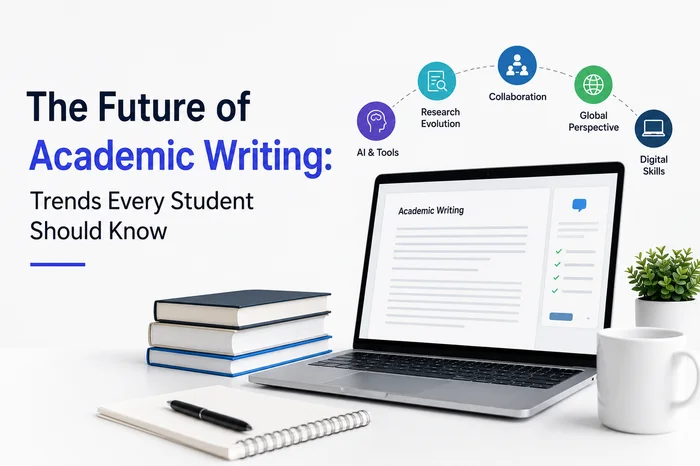
In 2026, academic writing is more technologically advanced than ever before. The use of AI tools and digital platforms to streamline research processes, manage citations, and boost productivity is becoming a staple in students’ workflows, as well as among researchers and scholars. These innovations have made a big difference in the production of annotated bibliographies. Many students find it difficult to write an annotated bibliography because the process involves proper citation, evaluating sources, and providing a summary and it is hard to do within a limited time in school. With the advent of modern AI tools, solutions are available that not only save time but also enhance the quality of academic work.
In the era of digital learning, AI-driven tools serve as indispensable allies for academic writing.
Purpose of an Annotated Bibliography
Annotated bibliographies are an important part of research projects, as they show a student’s understanding of the scholarly sources. They are frequently employed by Professors to evaluate if students can critically read literature and find trustworthy academic resources. Another use of a solid annotated bibliography is to structure information prior to writing essays, dissertations, or journal articles.
In today’s context of higher education, universities expect their students to study the literature thoroughly and not simply gather the references. Annotated bibliographies help students think analytically, read more carefully and improve their academic writing. They also help students to find out gaps in research and the perspectives of different people.
The difficulty is in organizing several databases, academic styles, and evaluations of the sources at once. AI tools have revolutionized research.
Grammarly and AI Writing Assistants
The top academic AI tools for 2026 will be Grammarly. Although Grammarly was created as a grammar checking device, it’s now a full academic writing device that can help you make your writing more clear, coherent, and even more academic. Students who are developing an annotated bibliography can take advantage of the platform to make edits to annotations and facilitate concise and professional writing.
It makes suggestions based on AI, which helps to avoid repetitive language and grammatical errors that are frequent in academic summarizing. More beneficial for students who need to work on research assignments, Grammarly also offers compatibility with citations and plagiarism checking. Many students who use a custom annotated bibliography writing service will still use Grammarly to edit their final papers and ensure academic precision.
Incorporate ChatGPT and AI Research Support
ChatGPT has emerged as a popular academic support resource for two reasons: brainstorming ideas and summarizing sources, and enhancing research processes. Students often resort to ChatGPT for comprehending intricate journal articles and drafting initial annotations.
The AI tool has the ability to rephrase academic terminology, which is beneficial for undergraduate students who might have a difficult time reading complex academic texts. Furthermore, ChatGPT can assist users in finding the strengths and weaknesses of academic sources, a crucial step in writing annotated bibliographies.
While it is valuable, students must fact-check AI-generated content and adhere to citation standards. More and more universities guide the responsible application of AI, and stress that AI technology is used to assist in the learning process and is not a substitute for critical thinking.
Mendeley: A Powerful AI Tools for Academic Collaboration
Another very useful AI tools for creating annotated bibliographies is Mendeley. Mendeley is a package that has been specifically engineered to be used by researchers or students in universities, where it incorporates academic networking capabilities in addition to citation management. People can search for research papers, communicate with other users, and organize research papers in one place.
Its highlighting and annotation features enable students to highlight portions of articles and add comments directly to sources, which makes the act of writing evaluations much more convenient. The AI-powered recommendation engine of Mendeley also recommends relevant scholarly articles based on a student’s research interests.
Often academic projects involve interdisciplinary research, therefore Mendeley’s collaborative environment is particularly useful for group assignments and post-graduation research.
AI-Powered Research Databases
Research databases have also evolved with AI integration. Today, platforms like Google Scholar and Elsevier provide intelligent search AI tools, which enable students to find high-quality academic sources more quickly than they would with a traditional keyword search.
AI algorithms can be used to identify articles that are cited the most or to find out research trends, and suggest peer-reviewed articles on a certain topic. This technology is a valuable AI tools for literature review and preparation of an annotated bibliography.
When students are under pressure, they tend to use these research databases along with academic support websites when they choose to buy college paper online for guidance or reference purposes. Nevertheless, teachers still nurture independent analysis and academic integrity in the use of external support services.
The increasing importance of automation in academic writing
With automation there has been a shift in the way students approach academic assignments. Students will no longer need to spend hours manually formatting citations – they will now be able to concentrate on analyzing research content and crafting their own critical arguments. AI tools have streamlined administrative processes and enhanced access to scholarly information.
This technological change has proven especially helpful for international students and non-native English speakers who may not be able to write academically in English. AI-empowered proofreading and summarization AI tools boost confidence and enhance the quality of students’ writing, enabling their more active involvement in higher education.
Meanwhile, universities are evolving their policies to tackle ethical issues related to the use of AI. When it comes to digital writing assistants, institutions are increasingly focusing on transparency, originality, and attribution.
Selecting the appropriate tool for the job
The choice of the best AI tools is determined by assignment and personal learning preferences. Depending on the amount of research students are conducting, they may find that comprehensive tools such as Zotero or Mendeley will be of more benefit, though EasyBib or Citation Machine may be more helpful for students who just need a quick citation.
Cost is also an important factor. There are some AI platforms that provide basic features for free, and advanced academic support through premium subscriptions. Students need to consider their research needs and whether they want a simple citation generator or a comprehensive research management system.
Learners often use a combination of tools to help them be most efficient. For instance, students can use Google Scholar to find sources, Zotero to keep track of them, Grammarly to edit annotations, and ChatGPT to explain difficult topics.
Conclusion
In 2026, the world of AI and online academic tools has revolutionized the creation of annotated bibliographies. Grammarly, Zotero, ChatGPT, Mendeley, Citation Machine and Google Scholar offer students more efficient and quick methods of organizing research, creating citations, and enhancing the quality of academic writing. These technologies benefit in terms of time savings, formatting mistakes, and scholarly engagement.
In the age of digital innovation, which the higher education sector is increasingly adopting, students who become skilled at using AI responsibly will reap immense benefits in their academic pursuits. But originality, critical thinking and ethical research practices are still essential for success. The combination of technological assistance and independent analysis allows students to produce high-quality annotated bibliographies that are in keeping with the standards for modern academic writing and that will give them valuable research skills needed for their future careers.






















Leave a Reply