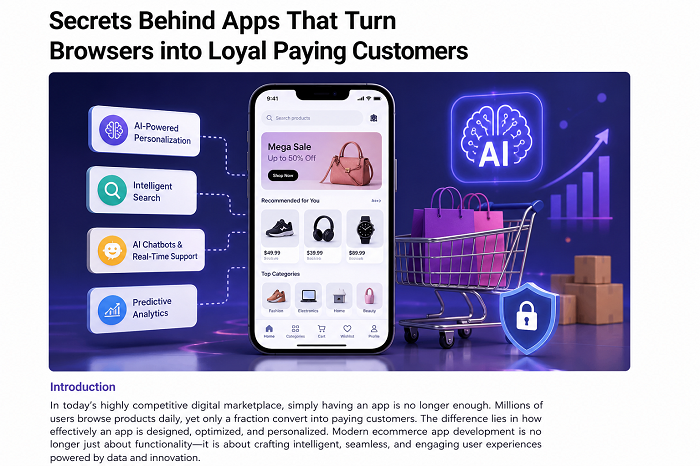
In today’s highly competitive digital marketplace, simply having an app is no longer enough. Millions of users browse products daily, yet only a fraction convert into paying customers. The difference lies in how effectively an app is designed, optimized, and personalized. Modern ecommerce app development is no longer just about functionality—it is about crafting intelligent, seamless, and engaging user experiences powered by data and innovation.
With the rapid evolution of artificial intelligence, businesses now have the ability to understand user intent, predict behavior, and deliver hyper-personalized journeys. These capabilities are redefining how apps convert casual browsers into loyal buyers.
Understanding User Intent in Ecommerce Apps
One of the biggest secrets behind high-converting apps is their ability to understand user intent. Users rarely follow a linear path when shopping online. They explore, compare, abandon carts, and return later. Apps that succeed are those that analyze these behaviors and adapt accordingly.
AI-driven analytics tools help identify patterns such as:
- Browsing habits
- Purchase frequency
- Product preferences
- Time spent on specific categories
By leveraging these insights, developers working in an ecommerce app development company environment can create smarter interfaces that respond dynamically to user needs. This results in more relevant product suggestions and smoother navigation.
The Role of Personalization in Conversion
Personalization is no longer optional—it is expected. Modern users demand experiences tailored specifically to them. AI makes this possible by analyzing massive datasets in real time.
For example, recommendation engines can:
- Suggest products based on past purchases
- Display items frequently bought together
- Highlight trending products within a user’s interest
This level of personalization significantly improves engagement and reduces decision fatigue. It also aligns with long-tail search behavior like “best budget smartphones for gaming” or “eco-friendly home decor items,” helping apps capture niche user intent more effectively.
Intelligent UI/UX Design That Drives Action
User experience plays a crucial role in conversion rates. Even the most advanced features fail if users find the app difficult to navigate. Successful apps prioritize simplicity, speed, and clarity.
Key UX strategies include:
- Minimalistic design with clear call-to-actions
- Fast-loading pages
- Intuitive navigation structure
- Seamless checkout process
Developers focusing on ecommerce app development services often emphasize reducing friction at every stage of the user journey. A well-designed interface ensures users can move from discovery to purchase without confusion or delays.
AI-Powered Search and Voice Commerce
Search functionality is another critical factor. Traditional keyword-based search is being replaced by AI-powered semantic search that understands user intent rather than just matching words.
Features like:
- Auto-suggestions
- Voice search
- Image-based search
are transforming how users interact with apps. In eCommerce mobile app development, integrating these advanced search capabilities helps users find products faster, increasing the likelihood of conversion.
Voice commerce, in particular, is gaining traction as more users rely on smart assistants. This shift is pushing developers to rethink search optimization strategies.
Predictive Analytics and Customer Retention
Converting a user once is valuable, but retaining them is where long-term success lies. Predictive analytics plays a key role in this process.
AI can forecast:
- When a user is likely to make a purchase
- Which products they may need next
- When they might churn
By acting on these insights, apps can send timely notifications, personalized offers, or reminders. This approach is widely used in online store app development services to maintain consistent engagement without overwhelming users.
Retention strategies also include loyalty programs, personalized discounts, and exclusive recommendations—all driven by data.
The Rise of Multi-Vendor and Scalable Platforms
Scalability is another factor that influences user experience. As apps grow, they must handle increased traffic, product listings, and transactions without compromising performance.
The concept of a multi-vendor eCommerce app has gained popularity because it allows multiple sellers to operate within a single platform. This not only expands product variety but also enhances user engagement by offering more choices.
However, managing such platforms requires robust backend systems, efficient inventory management, and seamless payment integration—all of which contribute to a better customer experience.
Cross-Platform Experience and Accessibility
Modern users expect consistency across devices. Whether they are using a smartphone, tablet, or desktop, the experience should remain seamless.
An iOS and Android shopping app ensures wider accessibility and uniform performance across platforms. Cross-platform development frameworks and responsive design techniques help maintain this consistency.
Accessibility also includes:
- Easy onboarding process
- Multiple payment options
- Language and regional support
These factors collectively improve user satisfaction and increase the chances of repeat purchases.
AI Chatbots and Real-Time Assistance
Customer support has evolved significantly with the integration of AI chatbots. Instead of waiting for human assistance, users can now get instant responses to their queries.
Chatbots can:
- Answer product-related questions
- Assist in order tracking
- Recommend products
- Resolve basic issues
In B2C eCommerce app development, chatbots play a crucial role in reducing drop-offs during the buying process. Immediate assistance helps users make quicker decisions, especially when they are unsure about a product.
Data Security and Trust Building
Trust is a major factor in converting users into paying customers. With increasing concerns around data privacy, apps must prioritize security.
Key practices include:
- Secure payment gateways
- Data encryption
- Transparent privacy policies
Users are more likely to complete transactions when they feel their information is safe. This is particularly important in mobile commerce app solutions, where transactions are frequent and sensitive data is involved.
Continuous Optimization Through A/B Testing
Successful apps are never static. They continuously evolve based on user feedback and performance data.
A/B testing allows developers to:
- Compare different layouts
- Test various call-to-action buttons
- Analyze user behavior under different scenarios
This iterative approach helps identify what works best and ensures the app remains aligned with user expectations.
Conclusion
The secret behind apps that successfully convert browsers into loyal paying customers lies in a combination of intelligent design, data-driven decision-making, and AI integration. From personalized recommendations to predictive analytics, every element plays a role in shaping the user journey.
As technology continues to evolve, the focus will shift even further toward automation, personalization, and seamless experiences. Businesses that understand and implement these strategies will be better positioned to meet user expectations and drive sustainable growth in the competitive ecommerce landscape.