

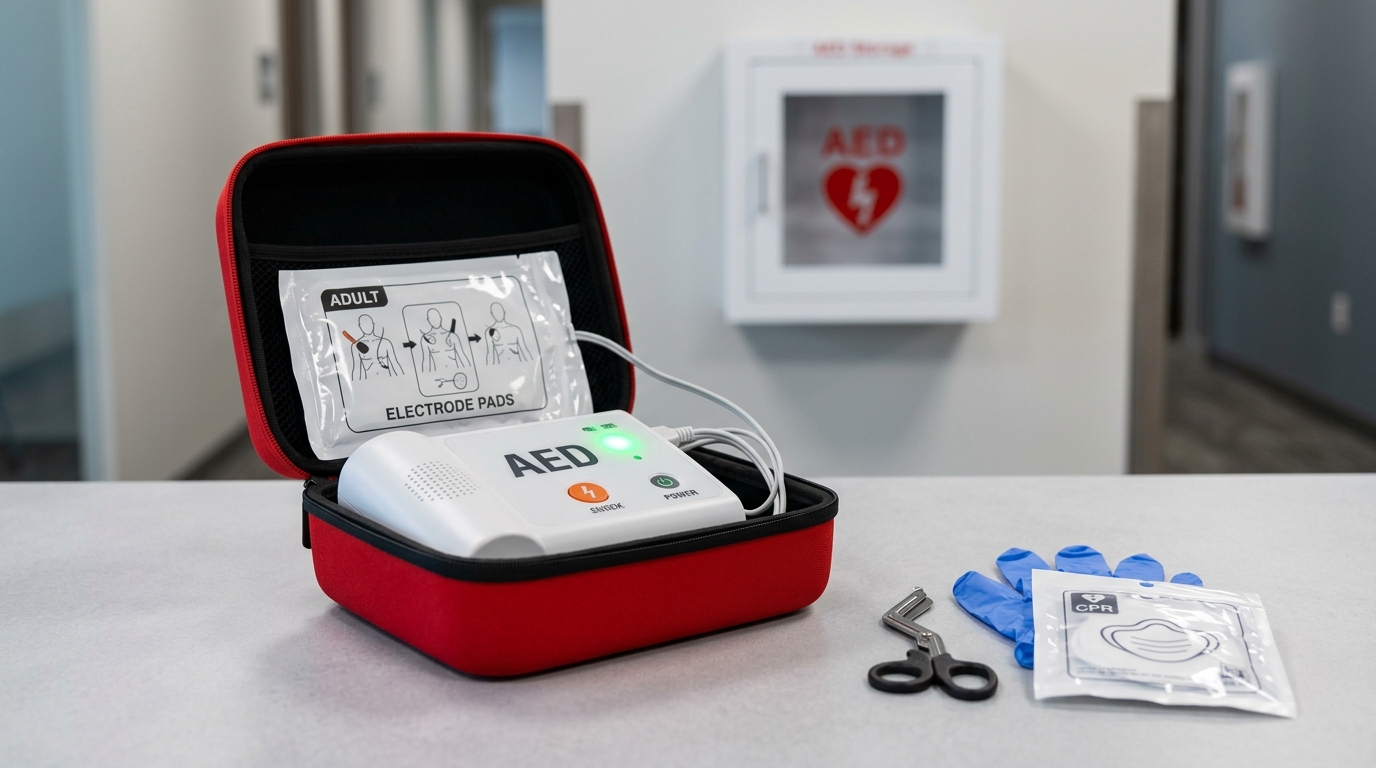
Sudden cardiac arrest does not wait for an ambulance. International data shows that survival drops by roughly 10 percent for every minute that passes without defibrillation, which means that within the average 8 to 12 minute emergency response time in major Pakistani cities, the chance of survival is almost gone unless someone nearby has access to an Automated External Defibrillator. With cardiac disease now the leading cause of death in Pakistan, schools, offices, gyms, mosques, banquet halls, and even forward-thinking households are urgently looking at the automated external defibrillator price so they can install life-saving equipment where their people gather. This guide explains exactly what an defibrillator AED does, what affects its cost, and how to make sure the unit you buy will actually be ready to save a life when seconds matter.
What Is an Automated External Defibrillator?
An AED is a portable electronic device that automatically diagnoses life-threatening heart rhythms (specifically ventricular fibrillation and pulseless ventricular tachycardia) and delivers a precisely calibrated electrical shock that can restore a normal heartbeat. The device is intentionally designed for use by non-medical bystanders. After the pads are placed on the patient’s bare chest, the AED itself analyses the rhythm, determines whether a shock is needed, and provides clear voice and visual instructions guiding the rescuer through the entire process, including hands-only CPR between shock cycles.
Why Every Workplace and Public Space in Pakistan Needs an AED
Sudden cardiac arrest can strike anyone regardless of age or fitness level. Athletes collapse during matches, employees collapse at their desks, and worshippers collapse during prayers. The single biggest factor that decides whether they survive is how quickly defibrillation reaches them. Internationally, public access defibrillation programmes have lifted survival rates from under 10 percent to over 70 percent in spaces equipped with AEDs and trained responders. Pakistani regulators are increasingly recommending defibrillator AEDs for public buildings, and major corporate offices have already started equipping their floors as part of basic occupational safety.
Factors That Affect Automated External Defibrillator Price in Pakistan
1. Brand and Country of Manufacture
Premium European and American brands such as Philips HeartStart, Schiller Switzerland, Zoll, and Defibtech command higher prices but come with longer pad and battery shelf lives, robust build quality, and proven field reliability. Mid-tier brands from Asia have closed the technology gap considerably and now offer excellent value for first-time defibrillator AED buyers.
2. Semi-Automatic vs Fully Automatic
Semi-automatic defibrillator AEDs analyse the rhythm and prompt the rescuer to press the shock button, while fully automatic units deliver the shock themselves once analysis confirms it is needed. Fully automatic units are slightly easier for untrained bystanders but cost a little more and remove an important moment of human safety check.
3. Pad Type and Pediatric Capability
Standard adult pads come included. Pediatric pads or a pediatric key feature for use on children under eight years old or under 25 kilograms is sold separately and is essential for schools, daycare centres, and pediatric clinics.
4. Battery and Pad Shelf Life
Batteries typically last two to five years standby, and pads usually expire after two to four years even if unused. Premium defibrillator AEDs offer longer shelf life on consumables, which lowers the long-term cost of ownership significantly. Always check the expiry dates of pads and batteries at the time of delivery.
5. IP Rating and Carry Case
Higher IP ratings mean better protection against dust and water, which matters if the device will live in a humid environment, on a sports field, or near a pool. A robust carry case with a clear status indicator is essential for any wall-mounted public installation.
Average AED Price Range in Pakistan (2026)
Entry-level imported AEDs in Pakistan currently start around PKR 195,000. Mid-range Schiller, Defibtech, and HeartSine units typically run between PKR 280,000 and PKR 425,000. Top-tier Philips HeartStart and Zoll AED Plus units, often the choice of hospitals, airlines, and large corporate campuses, range from PKR 450,000 to PKR 750,000. Replacement pad sets generally cost PKR 8,000 to PKR 22,000, and battery packs PKR 18,000 to PKR 55,000 depending on the model.
Top AED Pick for Pakistani Hospitals and Workplaces
Among the defibrillator AEDs available locally, the Schiller Switzerland FRED PA-1 AED stands out as the gold-standard choice for Pakistani hospitals, corporate offices, and educational institutions. Available in both semi-automatic and fully automatic versions, the FRED PA-1 delivers Schiller’s renowned biphasic shock waveform with industry-leading reliability and safety record. The fully automatic version is particularly valuable in public-access settings because it removes the hesitation moment when an untrained bystander has to decide whether to press the shock button. The connected Online version uses LifeDataNet G2 to send real-time status alerts about battery and electrode expiration via email, ensuring the device is never quietly out of service when it matters. Automatic self-tests run continuously, and the LED status indicator gives immediate visual confirmation that the unit is ready. For institutions that take cardiac safety seriously, this is one of the most trusted defibrillator AEDs on the market today.
How to Choose the Right AED for Your Setting
Match the Device to Your Risk Environment
A school gym needs an AED with pediatric capability and a tough carry case. An air-conditioned office may prioritise a quieter, smaller wall-mounted unit. A factory floor with dust and vibration needs a higher IP rating. There is no universal best AED, only the best AED for your specific environment.
Plan for Training Alongside the Purchase
Even though AEDs are designed to be used by untrained bystanders, basic life support and AED familiarisation training dramatically improves real-world response times. Reputable suppliers in Pakistan now bundle training sessions with their AED packages, and this should be a deciding factor in your purchase.
Set Up a Maintenance Schedule
Assign one person responsibility for monthly visual checks of the AED status indicator, and diary the pad and battery expiry dates so replacements arrive before the existing ones expire. An AED with expired pads is just an expensive plastic box.
Common Mistakes Organisations Make
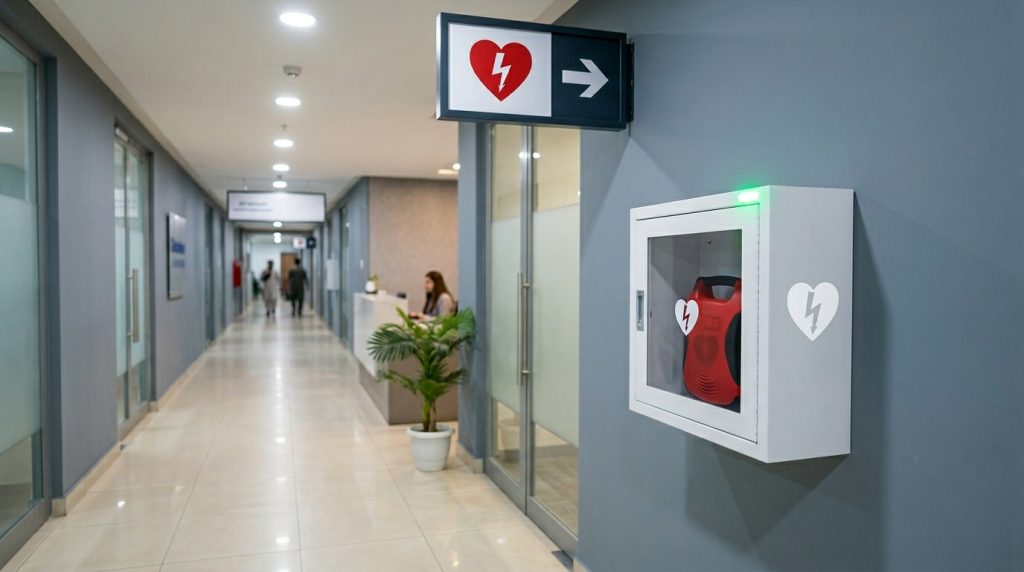
The single most common mistake is buying the cheapest unit and then forgetting about it for years. When the emergency finally happens, the pads have expired, the battery is dead, and the device cannot deliver the therapy. The second mistake is hiding the AED in a locked office to prevent theft. An AED that cannot be reached in 90 seconds offers almost no benefit, so units must be visibly mounted in high-traffic areas with clear signage.
Final Thoughts on Buying an AED in Pakistan
Investing in an AED is one of those decisions where the cost looks high until the day it saves a life, and then it looks like the best money you ever spent. Choose a brand with strong local service support, train at least three people in your facility on its use, and check pad and battery expiry every quarter. For organisations that want to compare multiple options before deciding, browsing the full defibrillator collection in Pakistan is the easiest way to see AEDs alongside hospital-grade manual defibrillators in a single place, with transparent pricing and full specifications. From entry-level public-access AEDs to advanced multi-mode hospital units with monitoring and pacing, having the full range visible side by side makes the buying decision much clearer. Whichever device you ultimately choose, the most important step is the decision itself: making sure your facility has a defibrillator on site before the emergency happens, not after.
Frequently Asked Questions (FAQs)
Q1: What is the price of an AED in Pakistan?
Entry-level imported AEDs start around PKR 195,000. Mid-range Schiller, Defibtech, and HeartSine units cost PKR 280,000 to PKR 425,000. Premium Philips HeartStart and Zoll AED Plus units range from PKR 450,000 to PKR 750,000.
Q2: Can untrained people use an AED?
Yes. AEDs are specifically designed for use by untrained bystanders. The device provides clear voice and visual instructions guiding the rescuer through every step, including pad placement, rhythm analysis, shock delivery, and CPR cycles.
Q3: How often should AED pads and battery be replaced?
Defibrillator AED pads typically expire 2 to 4 years after manufacture, and batteries last 2 to 5 years on standby. Always check expiry dates monthly and replace pads or batteries before they expire so the device is always ready for an emergency.
Q4: Where should an AED be installed in a building?
Install AEDs in high-traffic, visible locations where they can be reached within 90 seconds from anywhere in the building. Reception areas, near elevators, gym entrances, and break rooms are common choices. Use clear signage and never lock the device in a cabinet.
Q5: Will an AED shock someone who does not need a shock?
No. AEDs analyse the heart rhythm before delivering any shock and only proceed if a shockable rhythm (ventricular fibrillation or pulseless ventricular tachycardia) is detected. If the rhythm is not shockable, the device will instruct the rescuer to start CPR instead.
















Leave a Reply