

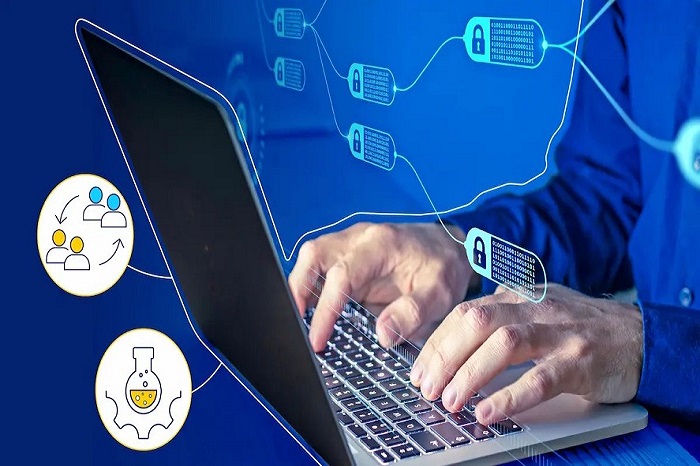
When blockchain first entered mainstream conversations, it was almost entirely associated with cryptocurrency and financial transactions. Over time, however, organizations across industries began to realize that blockchain’s greatest value extends far beyond payments. At its core, blockchain is a trust infrastructure—one that enables organizations to validate, secure, and preserve the authenticity of data. This is why Blockchain for Data Integrity is now becoming a major driver of innovation across healthcare, supply chain, government, cybersecurity, education, and enterprise IT.
As data volumes continue to grow and businesses rely more heavily on digital ecosystems, the ability to verify that information has not been altered is no longer optional. It is a strategic requirement. Companies like ULedger are helping enterprises move beyond finance by building trusted systems that ensure data provenance, transparency, and long-term reliability.
Why Data Integrity Has Become a Cross-Industry Priority
Every industry now depends on data-driven decisions. Whether it is a patient record in healthcare, a shipment update in logistics, or a legal document in compliance, the value of that data depends entirely on its integrity.
The problem is that traditional systems are increasingly vulnerable to:
- Unauthorized data modification
- Cyberattacks and ransomware
- Internal fraud
- Human error
- Data silos and inconsistent records
- Lack of auditability
This is where Blockchain for Data Integrity delivers unique value. Instead of relying on a centralized database that can be changed or corrupted, blockchain creates a distributed ledger where every record is timestamped, cryptographically linked, and verifiable.
ULedger’s data validation model strengthens this process by ensuring that enterprises can prove authenticity without exposing sensitive information.
Healthcare: Trusted Patient Data and Clinical Accuracy
Healthcare is one of the most critical sectors benefiting from Blockchain for Data Integrity.
Patient records often move across hospitals, labs, insurance systems, and specialists. In traditional environments, discrepancies between systems can lead to treatment errors, delays, or compliance risks.
Blockchain helps solve this by creating:
- Immutable patient histories
- Trusted prescription logs
- Secure medical imaging records
- Verified clinical trial data
- Tamper-proof insurance claims
ULedger enables healthcare organizations to validate records at every stage, ensuring data remains accurate and trustworthy while improving interoperability.
The result is better patient outcomes and stronger regulatory compliance.
Supply Chain: Provenance, Visibility, and Authenticity
Global supply chains generate enormous volumes of data—shipping events, warehouse scans, certifications, and supplier records.
The challenge is not collecting data; it is trusting it.
Blockchain for Data Integrity ensures that every supply chain event is permanently recorded and cannot be altered later. This is especially important for industries such as pharmaceuticals, food safety, electronics, and luxury goods where counterfeit risk is high.
Cross-industry supply chain innovation includes:
- Product provenance tracking
- Anti-counterfeit verification
- ESG and sustainability reporting
- Vendor certification validation
- Temperature and condition logs
- Customs and compliance documentation
ULedger strengthens trust across supplier ecosystems by validating the authenticity of operational records and partner-submitted data.
Government and Public Records: Transparency at Scale
Public sector organizations manage land records, identity systems, tax filings, legal archives, and citizen services.
Because these records often need to remain accurate for decades, Blockchain for Data Integrity offers significant advantages.
Key government use cases include:
- Land registry validation
- Secure digital identity systems
- Court evidence chains
- Public procurement transparency
- Cross-agency data verification
- Voting audit records
By reducing the risk of tampering and improving public trust, blockchain enables stronger governance frameworks.
ULedger’s validation-first architecture aligns especially well with public sector requirements where authenticity and auditability are mission-critical.
Cybersecurity: Securing Logs, Evidence, and Incident Response
Cybersecurity teams increasingly use Blockchain for Data Integrity to protect forensic evidence and system logs.
In traditional systems, attackers may alter logs to hide their actions. Blockchain solves this by creating a cryptographically verifiable trail of events.
Important cybersecurity applications include:
- SIEM log validation
- Incident response evidence chains
- Threat intelligence provenance
- Malware analysis reporting
- Compliance monitoring
- Third-party security attestations
ULedger helps organizations ensure that digital evidence remains trustworthy during audits, breach investigations, and legal reviews.
This cross-industry use case is becoming especially important as ransomware and insider threats continue to rise.
Education and Credentialing: Verifiable Digital Trust
Educational institutions and certification bodies are embracing Blockchain for Data Integrity to solve credential fraud.
Degrees, certifications, professional licenses, and training completions are often difficult to verify across systems.
Blockchain enables:
- Tamper-proof academic transcripts
- Instant certificate verification
- Fraud-resistant professional licensing
- Trusted skills records
- Lifelong learner portfolios
With ULedger, institutions can validate credentials while giving employers and learners confidence in the authenticity of achievements.
This innovation is particularly valuable in global workforce ecosystems.
Legal, Compliance, and Audit Workflows
Industries with strict regulatory obligations are rapidly adopting Blockchain for Data Integrity to improve compliance.
Audit trails are only valuable if they can be trusted.
Blockchain strengthens:
- Chain-of-custody documentation
- Legal evidence preservation
- Regulatory reporting integrity
- Internal control validation
- Policy acknowledgment records
- Contract lifecycle events
ULedger’s focus on trusted validation supports organizations that need defensible proof of data authenticity during disputes or regulatory reviews.
Enterprise IT and Cloud Infrastructure
As enterprises move data into hybrid and multi-cloud environments, consistency and trust become harder to maintain.
Blockchain for Data Integrity supports cloud and enterprise IT teams by validating:
- Configuration changes
- Backup verification
- API event records
- Data migration trails
- Cross-platform synchronization
- Access and privilege changes
This creates a resilient trust layer across modern distributed systems.
ULedger helps enterprises implement this validation layer without disrupting existing infrastructure investments.
Why Cross-Industry Adoption Is Accelerating
The growth of Blockchain for Data Integrity beyond finance is being driven by several major trends:
Digital Transformation
As organizations digitize operations, trusted records become foundational.
AI and Automation
AI systems depend on reliable training and operational data. Blockchain helps verify provenance and prevent data poisoning.
Compliance Pressure
Industries need defensible audit trails and tamper-proof reporting.
Ecosystem Collaboration
Modern business increasingly depends on trusted data exchange across partners.
Long-Term Data Preservation
Some records must remain trustworthy for decades.
ULedger addresses these needs by combining enterprise-grade validation with scalable blockchain trust frameworks.
Challenges to Cross-Industry Adoption
Despite strong momentum, organizations still face barriers:
- Legacy system integration
- Governance complexity
- Privacy requirements
- Interoperability across ecosystems
- User education and adoption
- Regulatory uncertainty
The key is adopting blockchain strategically, focusing on data validation use cases where trust failures have the highest cost.
The Future of Blockchain for Data Integrity
The next phase of enterprise blockchain growth will be defined by cross-industry trust networks.
Instead of isolated use cases, organizations will increasingly participate in shared ecosystems where healthcare providers, insurers, suppliers, governments, and enterprises exchange validated data securely.
Emerging innovation areas include:
- AI data provenance
- IoT device trust validation
- Quantum-safe record preservation
- Cross-border compliance automation
- Decentralized identity ecosystems
ULedger is well-positioned for this future because its architecture centers on data authenticity rather than narrow transactional use cases.
Conclusion
The story of blockchain is no longer limited to finance. Its greatest enterprise value lies in creating trusted digital ecosystems where data integrity is guaranteed.
From healthcare and supply chains to cybersecurity, legal workflows, education, and public records, Blockchain for Data Integrity is becoming the foundation for cross-industry innovation.
By helping organizations validate, preserve, and prove the authenticity of critical data, ULedger is enabling a future where trust is built directly into digital infrastructure.
As industries continue to modernize, Blockchain for Data Integrity will move from competitive advantage to operational necessity.

















Leave a Reply