

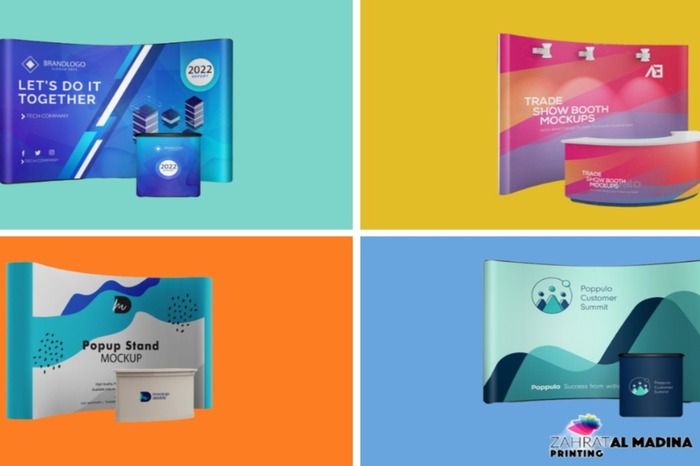
Exhibitions, trade shows, conferences, product launches, and corporate events all depend on good visual presentation. Visitors often see an event display before they speak with a representative or learn about a product. Therefore, the way a business presents its space can influence how people understand and remember it.
Pop up display banners are commonly used for this purpose because they provide a large graphic area without requiring a permanent installation. They can create a backdrop, define an exhibition space, display important information, and support consistent branding. At the same time, many systems are designed to be portable, making them suitable for organisations that attend different events throughout the year.
There are several types of pop-up systems available, including Straight Pop-Up, Curved Pop-Up, Softcase Pop-Up, Hardcase Pop-Up, and Fabric Pop-Up displays. Each type has different features, appearances, and practical benefits.
Choosing the right display depends on the event, available space, transportation requirements, design, and expected frequency of use. The following ten points explain how pop-up displays work and what businesses should consider before selecting one.
1. Pop Up Display Banners Create an Immediate Visual Focus
A busy exhibition hall can contain many stands competing for attention. Large graphics can help visitors identify a particular display from a distance.
Pop up display banners provide a broad surface for presenting:
- Company logos
- Product images
- Event names
- Short messages
- Brand colours
- Service information
The large graphic area creates a clear visual focus and can help organise the exhibition space.
However, visibility does not mean that every available area should be filled with text. A simple layout with a clear message is generally easier to understand from a distance.
Large images, readable headings, and sufficient empty space can make the display more effective.
2. Straight Pop-Up Displays Provide a Traditional Exhibition Look
A Straight Pop-Up display uses a flat, straight structure. It creates a clean backdrop that works well behind exhibition counters, presentation areas, and reception desks.
The straight format provides a predictable rectangular surface for graphics. This makes it easier to arrange logos, images, headings, and other design elements.
Straight displays are commonly suitable for:
- Trade shows
- Corporate exhibitions
- Conferences
- Product presentations
- School events
- Press areas
The simple shape can also make the display easier to position against walls or within standard exhibition spaces.
For businesses that prefer a straightforward and structured appearance, the straight format can be a practical choice.
3. Curved Pop-Up Displays Add More Visual Depth
A Curved Pop-Up display has a gently curved structure rather than a flat surface. The shape can create a more dynamic appearance and help the display stand out from standard rectangular backgrounds.
The curved design can also create a sense of depth within an exhibition stand. Depending on the size and surrounding layout, it may make the display area feel more enclosed and visually complete.
Curved pop-up systems can be used for:
- Exhibition booths
- Corporate events
- Product launches
- Conferences
- Media areas
- Promotional presentations
When designing graphics for a curved display, the artwork should account for the shape of the frame. Important text and logos should be positioned carefully so they remain easy to read.
4. Softcase Pop-Ups Focus on Easy Transportation
A Softcase Pop-Up combines a portable display structure with a soft carrying case. This type can be useful for organisations that frequently move their displays between different venues.
Transportation is an important consideration for businesses that attend events in different cities. A lightweight carrying solution can make it easier to move the display from a storage area to a vehicle and then into an exhibition hall.
Softcase systems are generally associated with portability and convenience.
They may be suitable for:
- Travelling exhibitions
- Conferences
- Marketing events
- Temporary displays
- Promotional campaigns
The case also provides a practical way to store the display when it is not being used.
5. Hardcase Pop-Ups Provide Added Protection
A Hardcase Pop-Up system is supplied with a rigid protective case. The hard case can provide additional protection during transportation and storage.
This can be particularly useful when a display is moved frequently or transported over longer distances.
The protective case can help reduce the risk of damage from impacts, pressure, or rough handling. It may also provide a more structured storage solution for the display components.
Hardcase systems can be considered by organisations that regularly participate in exhibitions and need additional protection for their equipment.
The choice between a soft and hard case should depend on transportation conditions, frequency of travel, storage requirements, and the level of protection needed.
6. Fabric Pop-Ups Offer a Modern Display Style
A Fabric Pop-Up uses printed fabric graphics rather than traditional rigid graphic panels. Fabric can provide a smooth and contemporary appearance when properly stretched over the frame.
Fabric displays are commonly used for:
- Exhibition backdrops
- Corporate events
- Conferences
- Product launches
- Media walls
- Promotional spaces
One advantage of fabric graphics is that they can often be removed from the frame and folded for transportation. This can make storage easier than carrying large rigid panels.
Fabric also works well with photographic images, gradients, detailed graphics, and modern branding styles.
The fabric should be selected according to the intended use, lighting conditions, and expected frequency of installation.
7. Pop-Up Displays Are Easy to Install
Event preparation can involve many tasks, including furniture placement, lighting, product arrangement, brochures, technology, and signage. A display that takes too long to assemble can create unnecessary pressure.
Many pop-up systems are designed to simplify installation. The frame can be expanded into position, followed by the attachment of the printed graphic.
A straightforward installation process offers several benefits:
- Less setup time
- Easier dismantling
- Reduced labour requirements
- Convenient transportation
- Faster event preparation
The exact installation method varies between display systems, so users should always follow the manufacturer’s instructions.
Proper installation is important because an incorrectly assembled display may appear uneven or unstable.
8. The Design Should Match the Event Purpose
The quality of a pop-up display banners is not determined only by its frame and material. Graphic design plays an equally important role.
A display designed for a corporate conference may use a different visual approach from one created for a retail promotion or product launch.
Before preparing artwork, organisers should consider:
- Who will see the display?
- How far away will visitors be?
- What information is most important?
- Where will the display be positioned?
- How long will people have to read it?
The main message should be visible quickly. Important information should not be placed too close to edges, joins, or areas that may be difficult to see.
Images should be high enough quality for large-format printing, while fonts should remain readable at the intended viewing distance.
9. Pop-Up Displays Can Be Reused at Different Events
One major advantage of pop-up systems is their potential for repeated use. Businesses that attend several events may use the same frame and update the graphics when necessary.
For example, a company could use one display for a general corporate exhibition and later replace the graphic with artwork for a specific product launch.
Reusable displays can help reduce the need to purchase a completely new structure for every event.
They can also help maintain consistent branding over time.
However, the graphics and frame should be stored properly between events. Fabric should be kept clean and dry, while hardware should be protected from unnecessary pressure or moisture.
10. Choosing the Right Pop-Up Display Requires Planning
There is no single pop-up display banners that is ideal for every business or event. The correct choice depends on several practical factors.
Before selecting a display, organisers should consider:
Event Size
A large exhibition space may require a larger display, while a smaller booth may need a compact system.
Display Shape
Straight systems provide a flat appearance, while curved systems create a more dynamic visual effect.
Transportation
Softcase systems may be useful when lightweight transportation is a priority, while hardcase systems can offer additional protection.
Graphic Material
Fabric can provide a modern appearance and convenient storage, while other materials may offer different visual or structural characteristics.
Frequency of Use
Businesses that attend regular events may benefit from a reusable system designed for repeated installation.
Planning these factors in advance can help prevent problems during event setup.
Final Thoughts
Pop up display banners are an important part of modern exhibition and event presentation. They provide businesses with a convenient way to display large graphics without requiring permanent installation. Their portability, visual impact, reusable structure, and range of styles make pop up display banners suitable for trade shows, conferences, corporate events, product launches, exhibitions, and promotional campaigns.
The most suitable pop up display banners depend on the requirements of each event. A Straight Pop-Up provides a flat and structured backdrop that works well in standard exhibition spaces. The rectangular surface makes it easier to organise logos, images, headlines, and other visual information.
A Curved Pop-Up provides a different appearance. Its curved structure can create depth and give an exhibition stand a more distinctive look. However, the graphic design should be prepared carefully to ensure that important information remains clear across the curved surface.
Transportation is another important consideration when selecting pop up display banners. A Softcase Pop-Up can be useful for businesses that regularly move their displays between different venues. Its carrying case can make transportation and storage more convenient.
A Hardcase Pop-Up provides a rigid protective case that may be more suitable for frequent transportation. Businesses that regularly travel to exhibitions may prefer this option when additional protection for their pop up display banners is important.
A Fabric Pop-Up can provide a modern and clean appearance. Fabric graphics can often be removed from the frame and folded, making them easier to transport and store. They can also work particularly well with detailed images, large logos, and contemporary event graphics.
Regardless of the type selected, the design of pop up display banners remains extremely important. A high-quality frame cannot make up for a confusing or overcrowded graphic. Visitors should be able to understand the main message quickly, so clear text, strong visual hierarchy, appropriate spacing, and high-resolution images are essential.
The location of the display should also influence the design. Pop up display banners positioned near an entrance may need a simple company name and logo, while displays inside an exhibition booth may provide more detailed product or service information.
Businesses should also consider how pop up display banners will work with other event materials. Counters, brochures, flags, roll-up banners, lighting, product displays, and backdrops can all be combined to create a complete exhibition environment. Using consistent colours and graphics across these elements can make the space appear more organised.
Installation and storage should not be overlooked. Pop up display banners should be assembled correctly and stored in suitable conditions between events. Proper care can help preserve the graphics, frame, and other components for future use.
Ultimately, the popularity of pop up display banners comes from their combination of convenience and visual communication. They can attract attention, display important information, strengthen brand visibility, and create a professional backdrop without the complexity of permanent signage.
Whether a business chooses Straight Pop-Up, Curved Pop-Up, Softcase Pop-Up, Hardcase Pop-Up, or Fabric Pop-Up, careful planning is essential. The right combination of structure, graphic design, material, transportation, installation, and placement can make pop up display banners a practical and effective part of an event presentation.
With proper planning and appropriate use, pop up display banners can help businesses create clear, organised, and visually engaging event spaces while providing a reusable display solution for future exhibitions and corporate activities.














Leave a Reply