

Pay-for-Performance SEO is becoming very popular in the digital marketing world. Many business owners like this model because it sounds simple and safe. In this model, you do not pay a fixed monthly fee. Instead, you pay only when you get results like higher rankings, more traffic, or more leads.
At first, it looks like a risk-free way to do SEO. But the truth is more complex. There are benefits, but there are also serious risks that every business should understand before choosing this model or hiring a Pay-for-Performance SEO company.
In this blog, we will explain everything in very simple words so you can clearly understand whether this SEO model is right for your business or not.
Pay-for-Performance SEO
What is Pay-for-Performance SEO?
Pay-for-Performance SEO is a type of SEO service where payment is based on results instead of fixed monthly fees.
The results can include:
- Ranking your website on Google’s first page
- Increasing organic traffic
- Ranking specific keywords
- Getting more calls, leads, or sales
This model is different from traditional SEO, where you pay every month for ongoing work regardless of immediate results.
Many businesses are attracted to a Pay-for-Performance SEO company because they feel they only pay when success is achieved. But SEO is not always fully controllable, and this is where the challenges begin.
Why Businesses Prefer Pay-for-Performance SEO
There are several reasons why this model is becoming popular:
1. It feels low risk
Businesses think they are safe because they pay only after results.
2. Budget-friendly option
Small businesses with limited budgets find it attractive.
3. Performance-based mindset
Companies feel the SEO provider will work harder for results.
4. Easy to understand
Payment is linked directly with performance, which is simple to follow.
Because of these reasons, many people search for a Pay-for-Performance SEO company when starting SEO for their website.
How SEO Actually Works in Real Life
Before understanding risks, it is important to know how SEO really works.
SEO depends on many factors like:
- Website quality and speed
- Content quality and usefulness
- Competition level in the market
- Backlinks from other websites
- User experience on the website
- Google algorithm updates
Search engines like Google take time to trust a website. Even with the best strategy, results usually take weeks or months.
This is why SEO cannot always guarantee fixed results in a short time.
Benefits of Pay-for-Performance SEO
Even though there are risks, this model also has some benefits.
1. Payment after results
You do not pay upfront for promises. You pay when goals are achieved.
2. Motivation for SEO teams
Since payment depends on results, SEO companies work harder to achieve targets.
3. Good for beginners
Small businesses or startups can try SEO without heavy monthly investment.
4. Clear performance goals
Both the business and SEO provider focus on measurable targets like rankings or traffic.
Major Risks of Pay-for-Performance SEO
Now let’s understand the most important part — the risks. These are the reasons why you should think carefully before choosing this model.
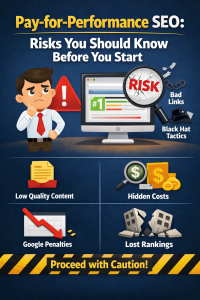
1. Low-quality SEO practices
Some companies try to show fast results using shortcuts. These may include:
- Spam backlinks
- Low-quality directories
- Keyword stuffing
- Fake traffic methods
These techniques may show short-term improvement, but they can damage your website in the long run.
2. Focus only on easy keywords
A Pay for Performance SEO company may target only easy keywords so they can rank quickly.
The problem is:
- Easy keywords may have low search value
- They may not bring real customers
- Business growth remains limited
So even if rankings improve, sales may not increase.
3. Hidden costs and extra charges
Many people believe Pay-for-Performance SEO has no extra cost, but that is not always true.
You may still need to pay for:
- Content writing
- Backlink building
- SEO tools
- Technical website fixes
In the end, total cost can become higher than expected.
4. Unrealistic promises
Some companies promise things like:
- “Rank #1 in 7 days”
- “Guaranteed first page in a week”
These promises are not realistic. SEO takes time, and no one can fully control Google rankings.
Such claims are often a warning sign of unsafe practices.
5. Short-term thinking
Pay-for-Performance SEO often focuses on fast results instead of long-term success.
This leads to:
- Quick ranking drops later
- Weak website structure
- Lack of brand authority
A strong online business needs long-term SEO, not just quick wins.
6. Lack of transparency
Some companies do not clearly explain how they achieve results.
You may not know:
- Where backlinks are coming from
- What SEO methods are used
- Whether strategies are safe or not
This lack of clarity can put your website at risk.
7. Risk of Google penalties
If unsafe SEO methods are used, Google can penalize your website.
This can lead to:
- Sudden drop in rankings
- Loss of traffic
- Removal from search results
Recovering from penalties takes a lot of time and effort.
How to Choose a Safe Pay-for-Performance SEO Company
If you still want to use this model, you must choose carefully. Here are some important tips:
1. Check their past work
Always look at their previous client results.
2. Ask about SEO methods
Make sure they follow Google-approved strategies.
3. Avoid instant ranking promises
Real SEO takes time, so avoid companies that promise fast results.
4. Understand pricing clearly
Ask about hidden or extra charges.
5. Focus on long-term growth
Choose a company that builds strong SEO foundations, not just quick rankings.
Pay-for-Performance SEO vs Traditional SEO
It is important to compare both models.
Pay-for-Performance SEO:
- Payment after results
- Focus on quick ranking
- Higher risk of shortcuts
- Less focus on long-term strategy
Traditional SEO:
- Monthly payment system
- Focus on long-term growth
- Safe and steady progress
- Better brand building
Traditional SEO is usually more stable and reliable for long-term success.
Who Should Use Pay-for-Performance SEO?
This model may be useful for:
- Small businesses testing SEO for the first time
- Startups with limited budget
- Low competition industries
- Short-term marketing goals
However, it may not be suitable for:
- Large businesses
- Highly competitive industries
- Long-term branding strategies
- Companies wanting stable SEO growth
Important Questions to Ask Before Starting
Before hiring a Pay-for-Performance SEO company, always ask:
- What SEO techniques do you use?
- Are your methods Google-safe?
- How do you define “results”?
- What happens if rankings drop later?
- Are there any hidden costs?
These questions help you avoid future problems.
Final Thoughts
Pay-for-Performance SEO looks attractive because you only pay for results. It feels safe, simple, and budget-friendly. But behind this simple idea, there are many risks such as low-quality SEO, hidden costs, short-term strategies, and even possible Google penalties.
SEO is not an instant process. It requires time, patience, and a strong long-term strategy.
Before choosing any Pay-for-Performance SEO company, think carefully about your business goals. If you want stable growth and long-term success, then a well-planned traditional SEO strategy is usually a safer and better option.
A smart decision today can protect your website’s future growth tomorrow.
For New Update also go with Smilebox

























Leave a Reply