

Smart televisions have changed the way we watch entertainment. Instead of relying only on traditional broadcast channels, viewers can access internet-based services, on-demand platforms, live programming, and a growing range of digital entertainment options from connected devices.
For anyone considering a Sky Glass IPTV Free Trial, understanding the technology, compatibility requirements, trial conditions, streaming quality, and security considerations is essential. A trial can be useful because it allows us to evaluate a service before deciding whether it deserves a longer commitment. However, not every service advertised as an IPTV trial offers the same experience, and compatibility with a particular television should never be assumed.
The most effective approach is to evaluate an IPTV service based on reliability, legitimate content distribution, device support, video quality, customer service, pricing transparency, and ease of use.
What Is IPTV?
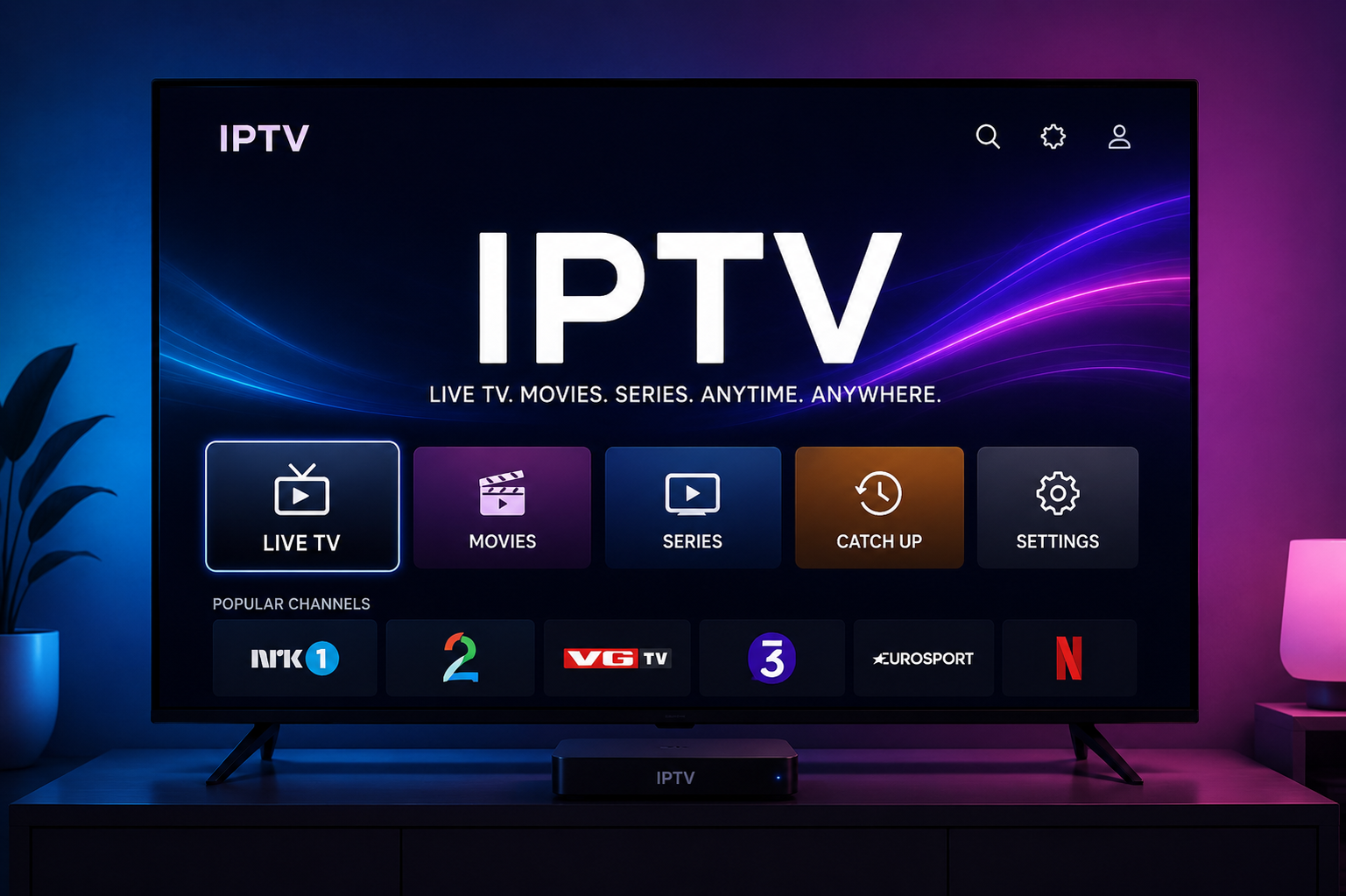
IPTV stands for Internet Protocol Television. It describes a method of delivering television programming through internet networks.
Traditional television may rely on terrestrial broadcasts, satellite signals, or cable infrastructure. IPTV instead uses internet connectivity to deliver video streams to a compatible device.
Depending on the service, IPTV can include:
- Live television channels
- On-demand programming
- Catch-up content
- Electronic program guides
- Recorded programs
- Different video resolutions
- Multi-device access
The technology itself is neither inherently good nor bad. What matters is how it is used and whether the provider has the necessary rights to distribute the content.
A legitimate IPTV provider should be transparent about its services and content licensing.
What Does a Sky Glass IPTV Free Trial Mean?
A Sky Glass IPTV Free Trial generally refers to a promotional period during which a provider allows potential customers to test an IPTV service before purchasing a longer subscription.
Trial conditions differ considerably between providers. Some trials may last only a short time, while others may provide limited access to certain features or programming.
We should never assume that the phrase “free trial” means there are no conditions.
Before starting, we should check:
- Trial duration
- Available channels
- Supported devices
- Whether payment details are required
- Automatic renewal conditions
- Cancellation requirements
- Account limitations
- Content licensing information
Reading these details beforehand can prevent unexpected charges and compatibility problems.
Is IPTV Compatible With Sky Glass?
Compatibility is one of the most important issues to investigate.
Sky Glass operates within its own smart television environment. An IPTV application designed for Android TV, Fire TV, or another operating system may not automatically be available or supported on Sky Glass.
Therefore, we should verify the provider’s current compatibility information before signing up.
If the provider requires an external supported streaming device, that requirement should be clearly understood before beginning the trial.
Compatibility is not simply about whether an application can technically be installed. The application should also provide stable playback, appropriate controls, account functionality, and a reliable user experience.
Why a Trial Can Be Useful
A trial provides an opportunity to evaluate the actual service instead of relying exclusively on advertising.
During a Sky Glass IPTV Free Trial, we can test the service under real household conditions.
For example, we can determine whether:
- Channels load quickly
- Playback remains stable
- Picture quality meets expectations
- Audio stays synchronized
- The electronic program guide works correctly
- The application is easy to navigate
- Customer support responds effectively
- The service works on the intended device
A short evaluation can reveal problems that would otherwise become apparent only after paying for a longer subscription.
How to Prepare Before Starting a Trial
Preparation makes the testing process much easier.
Check Internet Stability
Streaming depends on a stable internet connection. We should test whether other online services work reliably before blaming the IPTV application.
Confirm Device Compatibility
The provider should clearly state whether the intended device is supported.
Review the Terms
We should know how long the trial lasts and what happens when it ends.
Understand Payment Conditions
If payment information is requested, we should determine whether the subscription automatically renews.
Check Content Availability
A service may advertise a large selection but still lack the particular channels or programming we actually watch.
How to Evaluate IPTV Video Quality
Picture quality should be judged under realistic conditions.
A television can support high-resolution video, but the quality of the incoming stream depends on the source.
During a Sky Glass IPTV Free Trial, we should examine:
Sharpness
Text, faces, and fine details should remain reasonably clear.
Motion
Sports and action scenes are particularly useful for identifying stuttering or poor frame handling.
Compression
Excessive compression can create blocky images, especially during fast-moving scenes.
Consistency
A service should ideally maintain stable quality rather than repeatedly dropping to lower-quality playback.
Audio Synchronization
Dialogue should remain properly aligned with the picture.
Testing several types of content provides a more accurate assessment than watching a single channel.
Understanding IPTV Buffering
Buffering happens when the playback device cannot receive enough data quickly enough to continue playing the stream.
There are several potential causes.
Weak Wi-Fi
A weak signal can result in inconsistent data transfer.
Network Congestion
Multiple devices using the same connection can reduce available bandwidth.
Router Problems
Temporary router issues can affect streaming.
Provider-Side Congestion
The IPTV provider may have infrastructure problems.
Poor Stream Quality
Some individual streams may simply be unreliable.
If only one channel buffers while everything else works normally, the problem may be specific to that stream.
How to Reduce Buffering
If buffering occurs, we should troubleshoot systematically.
First, test another channel.
Next, check whether other streaming platforms work normally.
Then restart the television and router.
If Wi-Fi appears weak, improve the router’s position or test a suitable wired connection where supported.
We should also reduce unnecessary network activity during testing.
If the problem remains limited to the IPTV service, provider-side infrastructure may be responsible.
Sky Glass IPTV Free Trial and Internet Requirements
Internet requirements vary according to video resolution and stream quality.
High-resolution content requires more bandwidth than standard-definition video. However, a stable connection is often more valuable than simply having a high advertised speed.
A connection experiencing packet loss or frequent interruptions can cause playback problems even when the measured download speed appears adequate.
We should therefore evaluate both speed and consistency.
Wi-Fi Optimization for Smart TVs
The location of the router can influence streaming performance significantly.
A router should ideally be positioned in an open area rather than hidden behind furniture or placed inside a cabinet.
We should also minimize unnecessary obstacles between the router and television.
If the television is located far away, a suitable mesh system or additional network access point may provide better coverage.
Wired vs Wireless Streaming
Ethernet can provide a more consistent connection than Wi-Fi when the necessary equipment supports it.
Wireless networking is convenient, but signal strength can fluctuate due to distance, interference, and physical obstacles.
If buffering continues despite good internet service, testing a wired connection can help determine whether wireless networking is the problem.
If performance improves significantly, the next step should be improving Wi-Fi rather than repeatedly modifying IPTV settings.
Common Login Problems
Account problems can sometimes appear to be technical failures.
Incorrect passwords, expired accounts, device restrictions, or subscription limitations can prevent access.
We should carefully verify the account details supplied by the provider.
If the service includes a password-reset function, we should use that instead of repeatedly guessing credentials.
We should also check whether the trial has expired.
Missing Channels During a Trial
A channel may be unavailable for several reasons.
The provider may not actually include it in the selected package. A particular stream may be temporarily offline, or regional availability may affect access.
We should therefore compare the actual channel list with what was promised before deciding whether the service meets our needs.
A large advertised channel count is less useful if the specific programming we watch is unavailable or unreliable.
Electronic Program Guide Problems
The electronic program guide, or EPG, provides information about upcoming programming.
An EPG may occasionally display incorrect times, missing descriptions, or incomplete listings.
This can result from outdated guide information, configuration issues, or provider-side data problems.
We should verify the television’s time and regional settings and follow the provider’s official configuration instructions where applicable.
Application Performance
The application used to access a service can affect the overall experience.
An unstable application may freeze, crash, take too long to load, or cause playback problems.
We should use applications that are officially supported by the relevant platform and provider.
Keeping supported software updated can also improve stability.
Security Considerations
Security is particularly important when installing software on internet-connected televisions.
We should avoid applications obtained from suspicious websites or unknown sources.
A legitimate service should not require users to disable essential security protections or provide unnecessary personal information.
Strong passwords should be used, and account details should not be shared casually.
Payment information should only be provided through trusted and secure channels.
How to Evaluate a Provider
A good IPTV provider should offer more than an impressive channel list.
We should consider:
Transparency: Are the service terms easy to understand?
Compatibility: Does the provider clearly explain supported devices?
Reliability: Does playback remain stable?
Support: Can customers obtain useful assistance?
Pricing: Are renewal and cancellation conditions clear?
Content rights: Is there clear evidence that programming is distributed legally?
Security: Does the service use trustworthy applications and account practices?
These factors provide a much stronger basis for choosing a service than promotional claims alone.
Red Flags to Watch For
Some warning signs should make us reconsider an IPTV service.
These include unclear company information, unrealistic promises, suspicious payment requests, unexplained software requirements, excessive permissions, and a refusal to explain content licensing.
Another warning sign is pressure to purchase a long-term plan immediately without giving users an opportunity to understand the service.
A genuine trial should allow potential customers to evaluate the service without unnecessary pressure.
What to Test During the Trial
We can make the trial more useful by creating a simple testing routine.
Test several channels at different times of day. Watch both live and on-demand content where available. Try fast-moving programming to assess motion quality. Check the electronic program guide. Observe how quickly channels change.
We should also test the service when other people are using the household network.
This produces a realistic picture of how the service performs under everyday conditions.
Sky Glass IPTV Free Trial: A Practical Testing Checklist
During a Sky Glass IPTV Free Trial, we should evaluate the following:
- Device compatibility
- Internet stability
- Channel availability
- Picture quality
- Audio quality
- Buffering frequency
- Channel switching speed
- EPG accuracy
- Application stability
- Customer support
- Pricing
- Cancellation terms
- Privacy practices
- Content licensing
A provider that performs well across these areas is much more likely to offer a satisfactory long-term experience.
What to Do When the Trial Ends
Before the trial expires, we should review the experience objectively.
Ask whether the service provided the channels we wanted, whether playback remained stable, whether the application was convenient, and whether the pricing represented reasonable value.
If payment begins automatically after the trial, we should understand exactly when that occurs.
If the service did not meet expectations, cancellation should be completed according to the provider’s stated terms.
There is no reason to continue a subscription that consistently fails to meet basic requirements.
Sky Glass IPTV Free Trial vs Long-Term Subscription
A trial and a long-term subscription serve different purposes.
A trial reduces uncertainty. A longer subscription may provide better value in some situations, but it also creates a greater commitment.
We should only consider a longer plan after confirming that the service works reliably on our equipment and provides the programming we actually want.
Longer commitments should never replace proper testing.
Conclusion
A smart television can provide a convenient gateway to internet-based entertainment, but a successful IPTV experience depends on more than simply having a compatible screen.
A Sky Glass IPTV Free Trial can provide a useful opportunity to evaluate an IPTV service before making a longer commitment. We should use that opportunity carefully by testing compatibility, streaming stability, video quality, channel availability, application performance, customer support, security, and subscription terms.
The best approach is to evaluate real-world performance rather than relying on promotional claims. A service that works reliably on one device may not perform identically on another, and a fast internet connection does not automatically guarantee uninterrupted playback.
By checking the important factors in advance and troubleshooting problems systematically, we can make a more informed decision and avoid unnecessary subscription costs. Most importantly, we should use reputable services that clearly operate within applicable content licensing requirements.
FAQs
1. What is a Sky Glass IPTV Free Trial?
It generally describes a temporary period offered by an IPTV-related provider during which users can test a service before purchasing a longer subscription. Conditions vary between providers.
2. Does every IPTV service work with Sky Glass?
No. IPTV services have different application and platform requirements. We should confirm compatibility with Sky Glass before signing up.
3. Can IPTV buffering be fixed?
Buffering can often be reduced by improving Wi-Fi, reducing network congestion, using a suitable wired connection, updating software, or addressing provider-side issues. The correct solution depends on the cause.
4. What should we test during an IPTV trial?
We should test channel availability, picture quality, buffering, audio synchronization, EPG functionality, application stability, compatibility, customer support, pricing, and cancellation terms.
5. Is IPTV automatically legal?
No. IPTV is a delivery technology. The legality of a particular service depends on whether it has the necessary rights to distribute its content. We should choose services that operate with appropriate licensing.

















Leave a Reply