Customer satisfaction has become one of the most important factors influencing success in the modern grocery industry. As consumers increasingly use digital platforms to purchase everyday essentials, grocery businesses need to provide convenient, reliable, and personalized shopping experiences. A well-designed mobile application can make it easier for customers to discover products, place orders, make payments, track deliveries, and receive support.
This is where grocery delivery app development plays an important role. By combining convenient shopping features with efficient order and delivery management, grocery applications can help businesses create smoother customer journeys. From faster ordering to real-time delivery updates, these applications can influence how customers interact with grocery brands and how satisfied they feel with the overall service.
Why Customer Satisfaction Matters in Grocery Delivery
Grocery shopping is a recurring activity, which means customers often interact with grocery businesses multiple times every month. A poor experience with product availability, delivery timing, payment processing, or customer service can encourage customers to look for alternatives.
On the other hand, a convenient and reliable experience can encourage repeat purchases and stronger customer relationships.
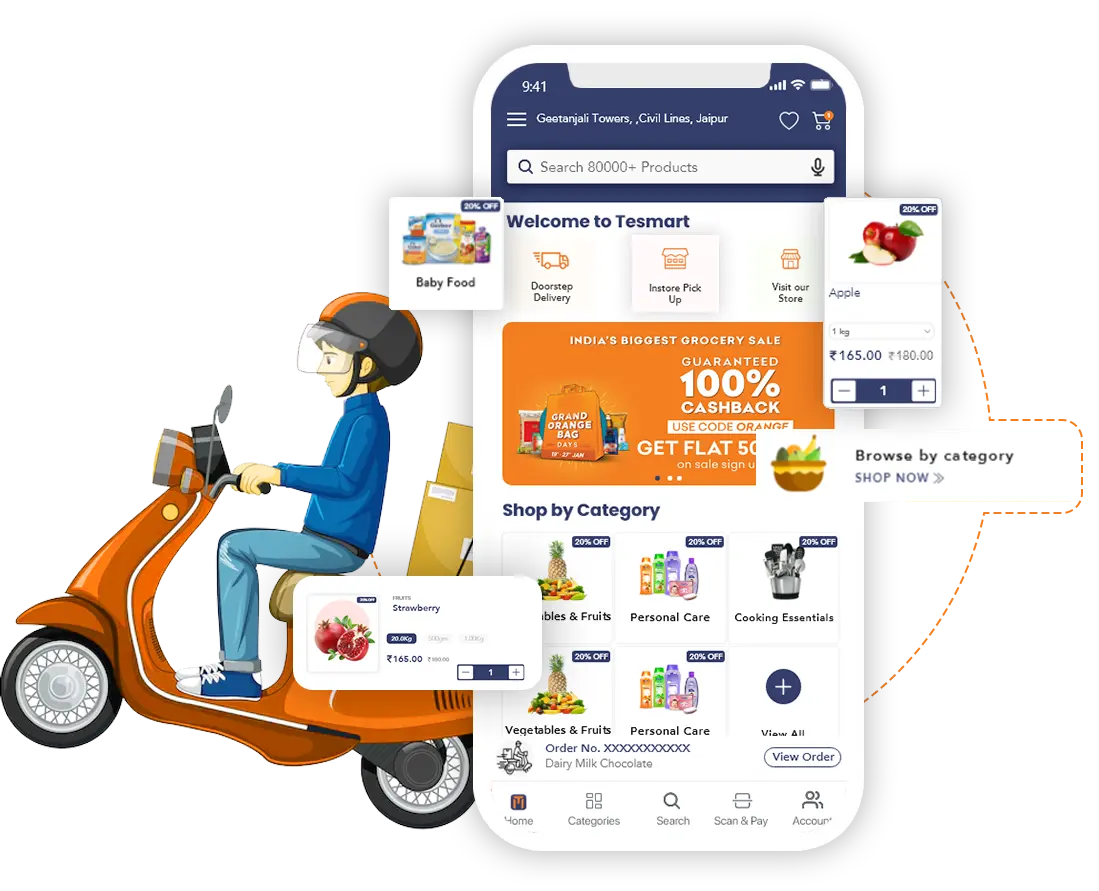
Grocery delivery applications provide businesses with an opportunity to manage different aspects of the customer journey through a single digital platform. Customers can browse available products, add items to a cart, select delivery preferences, make payments, and monitor their orders without visiting a physical store.
When these features work together effectively, the overall shopping experience can become more convenient.
How’s Grocery Delivery App Development Improving Customer Satisfaction?
1. Providing Greater Shopping Convenience
Convenience is one of the biggest advantages of online grocery applications. Customers can shop from their smartphones without traveling to a store or waiting in checkout queues.
A mobile application can allow users to search for products, compare options, add items to their cart, and place orders within a few minutes.
Customers can also shop at times that suit their schedules. Whether they need groceries during the morning, evening, or outside traditional store hours, an app can provide continuous access to available products and services.
This flexibility can significantly improve the overall shopping experience.
2. Simplifying Product Search
Finding specific products in a physical grocery store can sometimes take time, particularly when customers have large shopping lists.
A grocery application can provide search functionality that allows customers to quickly locate products by name, category, brand, or other relevant attributes.
Filters and sorting options can further simplify product discovery. Customers may be able to filter products based on price, availability, popularity, dietary preferences, or promotional offers.
A simpler search process reduces the time required to build an order and can contribute to a smoother customer experience.
3. Offering Personalized Recommendations
Personalization can help customers discover products that match their preferences and previous purchasing behavior.
Grocery applications can use customer data, where appropriate and with suitable privacy controls, to provide personalized recommendations. For example, an application may highlight frequently purchased items or suggest complementary products.
A customer who regularly purchases breakfast products may receive relevant suggestions when placing a new order.
Personalized experiences can make an application feel more useful while helping customers save time during routine shopping.
4. Improving Product Availability Information
Customers expect accurate information about whether products are available before placing an order.
Poor inventory visibility can lead to situations where customers select products that are later unavailable. This can negatively affect satisfaction.
Modern grocery applications can integrate inventory systems with the customer-facing platform to provide more accurate availability information.
When inventory updates are synchronized effectively, customers can make better purchasing decisions and experience fewer unexpected substitutions or cancellations.
5. Making Ordering Faster
A complicated checkout process can create unnecessary frustration. Customers generally expect grocery applications to make ordering simple and straightforward.
Features such as saved addresses, saved payment methods, shopping lists, reorder options, and one-click purchasing can reduce the time required to complete recurring orders.
For example, customers who frequently purchase the same household items can use reorder functionality rather than searching for every product again.
A faster ordering process can make customers more likely to return to the application for future purchases.
6. Supporting Multiple Payment Options
Payment flexibility is another factor that can influence customer satisfaction.
Different customers prefer different payment methods, including debit cards, credit cards, digital wallets, bank transfers, or cash on delivery where available.
A grocery application can integrate multiple payment options to provide customers with greater flexibility.
Secure payment processing is equally important. Customers need confidence that their financial information and transaction details are handled appropriately.
By combining payment flexibility with suitable security measures, grocery businesses can create a more convenient checkout experience.
7. Providing Real-Time Order Tracking
After placing an order, customers often want to know when their groceries will arrive.
Real-time order tracking can provide visibility into the delivery process. Customers may receive updates showing whether their order has been confirmed, prepared, dispatched, or delivered.
Location-based tracking can also provide estimated arrival information when supported by the delivery system.
This transparency can reduce uncertainty and improve customer confidence because users can monitor their orders instead of waiting without information.
8. Improving Delivery Accuracy
Receiving the correct products at the expected time is fundamental to customer satisfaction.
A well-designed grocery application can connect customer orders with store, warehouse, and delivery workflows. Order details can be transferred accurately between different stages of fulfillment.
Delivery personnel can access relevant order information through a dedicated delivery interface, reducing the possibility of confusion.
The application can also support delivery instructions, customer notes, and address information to improve delivery accuracy.
9. Supporting Flexible Delivery Options
Customers have different schedules and delivery requirements. Some may prefer immediate delivery, while others may want to schedule an order for a specific time.
Grocery applications can offer delivery-slot selection and scheduled delivery features based on the business model.
Customers can choose an available time that fits their schedule rather than having to remain available for an uncertain delivery window.
Flexible delivery options can be especially valuable for working professionals, families, and customers managing busy routines.
10. Enhancing Customer Support
Customer support can significantly influence how users perceive a grocery brand.
Applications can integrate support features such as live chat, help centers, order-related assistance, FAQs, and complaint management.
For example, if a customer receives an incorrect product, they can use the application to report the issue without needing to search for separate contact information.
Businesses can also use customer-support systems to track complaints and ensure that issues are addressed appropriately.
Quick and accessible support can turn a potentially negative experience into an opportunity to build customer trust.
Loyalty Programs and Rewards
Customer loyalty programs can encourage repeat purchases by offering benefits for continued engagement.
A grocery delivery application can integrate loyalty points, promotional coupons, membership plans, referral programs, and personalized offers.
Customers can view available rewards directly within the application and apply eligible discounts during checkout.
Businesses can also design loyalty programs around purchasing behavior. For example, frequent customers could receive special offers or benefits based on their engagement.
When customers see tangible value from repeatedly using an application, their relationship with the grocery brand can become stronger.
Reducing Friction Through Reordering
Grocery shopping often involves purchasing the same products repeatedly. Customers may buy similar household essentials every week or month.
A grocery application can simplify this process through order history and quick-reorder features.
Instead of creating an order from scratch, customers can select a previous order and modify quantities or remove unwanted items.
This functionality saves time and reduces the effort associated with recurring grocery shopping.
Improving Communication With Customers
Clear communication can prevent confusion throughout the order process.
Applications can send notifications related to order confirmation, payment status, product substitutions, delivery updates, and successful delivery.
For example, if an item becomes unavailable, the customer can be informed before the order is finalized or delivered, depending on the business workflow.
Businesses can also use notifications to communicate promotional offers and relevant updates without overwhelming customers.
Effective communication helps customers understand what is happening at each stage of their order.
Using Customer Feedback to Improve Services
Customer feedback provides valuable information about what is working and where improvements are needed.
Grocery applications can include ratings, reviews, surveys, and feedback forms. Customers can provide opinions about product quality, delivery performance, application usability, and customer service.
Businesses can analyze this feedback to identify recurring issues.
For example, if customers frequently report delayed deliveries in a specific location, the business can investigate delivery capacity and route planning.
This creates a continuous improvement cycle where customer feedback contributes to better service quality.
The Role of User-Friendly Design
Even a feature-rich grocery application can negatively affect customer satisfaction if it is difficult to navigate.
A clean interface, intuitive navigation, readable product information, accessible buttons, and simple checkout process can make the application easier to use.
During grocery delivery app development, businesses should focus on the complete customer journey rather than simply adding numerous features.
The application should make common actions easy to complete, including searching for products, adding items to a cart, selecting a delivery slot, making a payment, and checking order status.
How Technology Can Further Improve Satisfaction
Advanced technologies can add additional capabilities to grocery delivery platforms.
Artificial intelligence can support product recommendations, demand forecasting, customer-service automation, and personalized offers.
Location-based technologies can improve delivery tracking and route planning. Analytics can help businesses understand customer behavior and identify opportunities to improve service quality.
Cloud infrastructure can support scalability during periods of high demand, while APIs can connect the grocery application with inventory, payment, logistics, and customer relationship systems.
The goal should be to use technology to solve real customer problems rather than adding complexity without practical value.
Challenges Businesses Need to Address
While grocery applications can improve customer satisfaction, businesses must address several challenges.
Application performance is important because slow loading times can frustrate users. Security is essential when handling customer accounts and payment information. Accurate inventory synchronization is necessary to reduce order issues.
Delivery operations also need to match customer expectations. Even a well-designed application cannot compensate for consistently late deliveries or poor product quality.
Businesses should therefore consider the entire service ecosystem, including technology, inventory, employees, delivery partners, customer support, and operational processes.
Measuring Customer Satisfaction
Businesses can use several metrics to evaluate the effectiveness of their grocery applications.
Important measurements can include customer ratings, repeat purchase rates, order completion rates, cart abandonment, delivery accuracy, customer-support response times, refund requests, and app engagement.
Customer feedback can provide qualitative insights, while analytics can identify behavioral trends.
By regularly evaluating these indicators, businesses can determine which parts of the customer journey require improvement.
Future of Grocery Delivery Applications
The grocery delivery market continues to evolve as customers become more comfortable with digital shopping.
Future grocery applications may incorporate more advanced personalization, AI-powered recommendations, voice-assisted shopping, automated fulfillment, smart inventory systems, and increasingly flexible delivery options.
Businesses may also explore subscription-based grocery services and intelligent shopping lists that automatically recommend commonly purchased products.
The focus will likely remain on making grocery shopping faster, easier, more personalized, and more reliable.
Conclusion
Customer satisfaction is closely connected to convenience, reliability, transparency, personalization, and service quality. Grocery delivery applications can bring these elements together within a single digital platform.
Grocery delivery app development can help businesses simplify product discovery, accelerate ordering, support flexible payments, provide real-time delivery tracking, improve communication, and offer personalized shopping experiences.
However, customer satisfaction depends on more than the application itself. Accurate inventory, reliable delivery operations, responsive customer support, secure payments, and quality products are equally important.
Businesses that combine strong technology with efficient operations can create grocery platforms that are easier to use and more responsive to customer needs. As digital grocery shopping continues to evolve, applications that prioritize convenience, personalization, transparency, and reliability can play an important role in building lasting customer relationships and supporting long-term business growth.