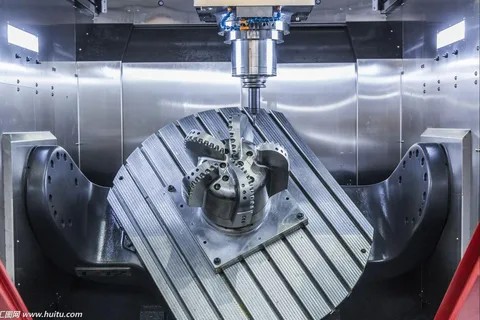
5-axis CNC machining is widely recognized for its exceptional ability to produce highly precise components. Unlike traditional machining methods that operate on three axes, this advanced technology allows simultaneous movement across five different axes, enabling cutting tools to approach the workpiece from virtually any direction. This flexibility significantly reduces positioning errors and ensures tight tolerances, which are essential in industries like aerospace, automotive, and medical manufacturing.
One of the key strengths of 5-axis CNC machining is its ability to maintain consistent accuracy even when producing highly detailed or intricate parts. By minimizing the need for multiple setups, it reduces the chances of human error and misalignment during repositioning. As a result, manufacturers can achieve superior dimensional accuracy and surface finishes in a shorter production cycle.
- Achieves extremely tight tolerances for critical components
- Reduces human error through fewer repositioning steps
- Produces smoother surface finishes with less post-processing
- Ensures consistent quality in complex part production
Increased Production Efficiency
One of the most important advantages of 5-axis CNC machining is its ability to significantly improve production efficiency. Since the machine can access multiple sides of a workpiece in a single setup, it eliminates the need for repeated clamping and repositioning. This streamlined workflow reduces downtime and allows manufacturers to complete projects faster without compromising quality.
In modern manufacturing environments, time is a critical factor. 5-axis CNC machining helps businesses meet tight deadlines by optimizing machining paths and reducing idle machine time. This efficiency not only increases output but also improves overall workflow management across production facilities.
- Reduces the number of setups required per part
- Speeds up overall machining and production cycles
- Minimizes machine downtime and idle operations
- Improves workflow efficiency in manufacturing plants
Ability to Manufacture Complex Geometries
5-axis CNC machining excels at producing highly complex and intricate geometries that are nearly impossible to achieve with conventional machines. The simultaneous movement of multiple axes allows cutting tools to maintain optimal angles, making it easier to machine deep cavities, curved surfaces, and irregular shapes with precision.
This capability is especially valuable in industries such as aerospace and automotive, where components often require advanced designs for performance and weight reduction. With 5-axis CNC machining, manufacturers can produce sophisticated parts in a single operation, eliminating the need for multiple machines or manual interventions.
- Enables machining of highly complex and organic shapes
- Ideal for aerospace, automotive, and medical components
- Reduces need for multiple machines or manual finishing
- Allows precise cutting of deep cavities and angled surfaces
Reduced Setup Time and Operational Costs
Another significant benefit of 5-axis CNC machining is the reduction in setup time, which directly leads to lower operational costs. Traditional machining often requires multiple setups, each involving manual adjustments, alignment, and calibration. In contrast, 5-axis systems complete most tasks in a single setup, saving both time and labor.
By minimizing setup requirements, manufacturers can also reduce the risk of errors that typically occur during repositioning. This efficiency translates into lower scrap rates and better resource utilization, ultimately improving profitability for manufacturing operations.
- Eliminates multiple repositioning and setup stages
- Reduces labor costs and manual intervention
- Lowers scrap rates by minimizing alignment errors
- Improves overall cost-effectiveness in production
Improved Tool Life and Material Flexibility
5-axis CNC machining also contributes to longer tool life and greater material versatility. Because the cutting tool can maintain an optimal angle relative to the surface, it experiences less stress and wear during operation. This results in extended tool lifespan and reduced tooling costs over time.
Additionally, this machining method is compatible with a wide range of materials, including metals, plastics, and advanced composites. Manufacturers can confidently work with challenging materials while maintaining high precision and efficiency throughout the production process.
- Extends cutting tool lifespan through optimized angles
- Reduces wear and tear on machining equipment
- Supports a wide range of materials and composites
- Enhances machining performance on difficult materials
Conclusion
5-axis CNC machining has transformed modern manufacturing by offering unmatched precision, efficiency, and flexibility. Its ability to reduce setup time, handle complex geometries, and improve overall production quality makes it an essential technology for industries that demand high-performance components. From aerospace engineering to automotive manufacturing, the advantages of this advanced machining process continue to drive innovation and productivity.
As manufacturers seek faster production cycles and higher accuracy standards, 5-axis CNC machining stands out as a powerful solution that balances cost-effectiveness with superior engineering capabilities.