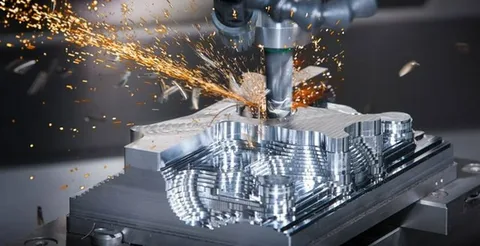
In modern manufacturing, precision and consistency are critical for producing reliable industrial parts. Custom CNC machining services play a vital role in achieving high-accuracy components used in aerospace, automotive, medical devices, electronics, and industrial machinery. These services combine advanced computer-controlled equipment with expert engineering to deliver parts that meet strict tolerances and performance requirements.
As industries continue to demand faster production and tighter precision, CNC machining has become the backbone of modern fabrication. It ensures repeatability, reduces human error, and supports complex designs that would be impossible with traditional machining methods. This article explores how custom CNC machining services deliver high-accuracy parts and components across different applications.
Precision Engineering in Custom CNC Machining
Custom CNC machining services are built around precision engineering principles that ensure every component is manufactured with extreme accuracy. Using computer numerical control systems, machines follow programmed instructions to cut, drill, and shape materials with minimal deviation.
This level of precision is especially important for industries where even a small error can lead to performance failure. Engineers rely on CNC systems to translate CAD designs into exact physical components while maintaining consistency across production batches.
Key benefits include:
- Extremely tight tolerances for complex parts
- Reduced human error during manufacturing
- High repeatability for mass production
- Compatibility with complex 3D designs
- Improved product reliability and performance
Precision engineering ensures that every part produced meets exact specifications, making CNC machining a trusted solution for high-performance industries.
Material Versatility for Industrial Applications
One of the strongest advantages of custom CNC machining services is their ability to work with a wide range of materials. From metals to plastics and composites, CNC machines can be configured to handle different densities and machining requirements.
This flexibility allows manufacturers to choose materials based on strength, weight, corrosion resistance, and application needs. Whether producing lightweight aerospace components or durable automotive parts, CNC machining ensures optimal material performance.
Common materials used include:
- Aluminum for lightweight structural components
- Stainless steel for corrosion resistance and strength
- Brass for electrical and decorative parts
- Titanium for aerospace and medical applications
- Engineering plastics for insulation and flexibility
Material versatility allows industries to design and produce parts tailored to specific operational environments without compromising quality or precision.
Advanced Technology and Automation in CNC Machining
Modern custom CNC machining services rely heavily on advanced technology and automation to improve efficiency and accuracy. Multi-axis CNC machines, AI-driven software, and real-time monitoring systems all contribute to enhanced production capabilities.
Automation reduces manual intervention, which not only speeds up production but also minimizes inconsistencies. This makes CNC machining ideal for both prototyping and large-scale manufacturing projects.
Technological advantages include:
- Multi-axis machining for complex geometries
- Automated tool changes for faster production
- Real-time quality monitoring systems
- CAD/CAM integration for design accuracy
- Reduced production downtime and waste
By integrating advanced technology, CNC machining services deliver faster turnaround times while maintaining superior accuracy and consistency.
Applications Across Multiple Industries
Custom CNC machining services are widely used across various industries due to their adaptability and precision. From healthcare equipment to heavy machinery, CNC-machined parts ensure performance, durability, and safety.
Each industry benefits from CNC machining’s ability to produce custom components that meet strict standards and regulatory requirements. This makes it an essential manufacturing solution in today’s industrial landscape.
Major application areas include:
- Aerospace components requiring high strength and precision
- Automotive engine parts and transmission systems
- Medical implants and surgical instruments
- Electronics housings and connectors
- Industrial machinery and tooling components
The versatility of CNC machining ensures that industries can rely on it for both prototyping and full-scale production needs.
Cost Efficiency and Production Optimization
While custom CNC machining services are known for precision, they also offer long-term cost efficiency. By reducing material waste, improving production speed, and minimizing errors, CNC machining helps manufacturers optimize their budgets.
Additionally, automation reduces labor costs and increases output, making it a cost-effective solution for both small and large production runs. Over time, businesses benefit from improved efficiency and reduced rework expenses.
Cost-saving advantages include:
- Reduced material waste through precise cutting
- Lower labor costs due to automation
- Minimal need for rework or corrections
- Faster production cycles for quicker delivery
- Scalable production for different order sizes
These benefits make CNC machining not only a precision-focused solution but also a financially sustainable manufacturing method.
Conclusion
Custom CNC machining services have revolutionized modern manufacturing by offering unmatched precision, flexibility, and efficiency. From high-accuracy aerospace parts to durable industrial components, CNC technology ensures that every product meets strict quality standards.
With advancements in automation, material versatility, and digital design integration, CNC machining continues to evolve as a core solution for industries worldwide. Businesses that invest in these services benefit from improved performance, reduced costs, and consistent product quality, making CNC machining an essential part of today’s industrial fabrication landscape.