

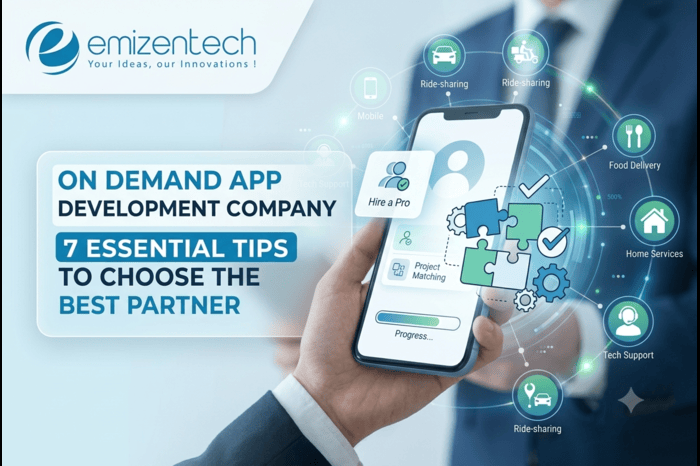
An on demand app development company is often the single most important decision a founder makes before writing a single line of code. Get this choice right, and the rest of the journey, design, testing, launch, tends to fall into place with far fewer surprises. Get it wrong, and even a solid app idea can end up delayed, over budget, or built in a way that’s difficult to scale later. Yet many first-time founders spend weeks perfecting their business plan and barely a day evaluating who will actually build the product.
This article walks through what separates a genuinely capable on demand app development company from one that simply talks a good game, along with practical ways to test that difference before signing a contract.
Why does this decision carry so much weight?
Unlike a typical mobile app, on-demand platforms involve multiple moving parts working together in real time, customers, service providers, and often a dispatcher or admin system coordinating everything behind the scenes. A ride-hailing app, for instance, needs live GPS tracking, instant driver matching, and secure payment processing all functioning smoothly at once. If the development team lacks experience with this kind of real-time architecture, the cracks tend to show up only after launch, when fixing them costs far more time and money than getting it right from the start.
This is part of why On-Demand App Development has become its own specialization within the broader app development industry, rather than something every general software agency handles equally well.
Look at Their Track Record with Similar Business Models
The single most telling signal is whether a company has actually built apps similar to what you’re planning. A firm that has spent years building e-commerce catalog apps may understand mobile development in general, but that doesn’t automatically translate into experience with dispatch logic, live location tracking, or dynamic pricing models that on-demand platforms typically require.
When reviewing a company’s portfolio, it helps to look past the visual polish of their case studies and ask specific questions about the underlying business model. Did they build a single-vendor delivery app, or something closer to a multi-vendor marketplace like Grubhub, where multiple restaurants and drivers interact within one system? These two models involve fairly different backend logic, and a company experienced in one doesn’t automatically transfer that expertise seamlessly to the other.
Ask for Specific Examples, Not Just a Portfolio Page
A polished portfolio page can be misleading, since agencies sometimes showcase design work they contributed to without having led the actual development. Asking directly which parts of a past project the team built themselves, and requesting a short call with a past client if possible, tends to reveal a more accurate picture than marketing materials alone.
Evaluate Their Technical Approach, Not Just Their Sales Pitch
During initial conversations, it’s easy for a sales representative to say all the right things without the technical team ever weighing in. A stronger signal of competence is whether the company can speak concretely about technology choices relevant to your specific app. For example, if your app depends heavily on real-time location updates, does the team have a clear point of view on which mapping API fits your budget and scale, and can they explain tradeoffs between options like Google Maps Platform and Mapbox rather than just recommending whichever one they’re most comfortable with?
Similarly, for apps expecting rapid growth, it’s worth asking how they plan to handle scaling. A company that mentions cloud-based auto-scaling infrastructure and has a plan for database optimization as user volume grows demonstrates a level of technical foresight that a company focused only on the initial build might lack.
Understand Their Communication and Project Management Style
On demand app development company rarely goes exactly according to plan, and how a company handles unexpected issues or scope changes says a lot about what working with them will actually feel like. Some companies use structured project management tools like Jira or Trello with weekly sprint reviews, giving clients visibility into progress at every stage. Others operate more loosely, updating clients only at major milestones, which can leave founders in the dark for weeks at a time.
Neither style is inherently wrong, but it’s worth being clear about your own preferences before committing. A founder who wants frequent check-ins and transparency into daily progress will likely feel frustrated working with a team that prefers infrequent, high-level updates, even if the final product turns out fine.
Check How They Handle Testing and Quality Assurance
Because on-demand apps involve multiple user roles and real-time coordination, testing tends to be more involved than with a typical single-user app. A company worth considering should be able to describe their approach to functional testing, load testing, and how they handle edge cases like poor GPS signal or payment failures. If a company glosses over this topic or treats testing as a quick final step rather than an ongoing part of development, that’s often a sign that quality assurance isn’t given the attention it deserves.
Ask About Their Bug-Fixing Process After Launch
It’s also worth understanding what happens once the app is live. Does the on demand app development company offer a defined period of post-launch support at no extra cost for fixing bugs that surface after release? Reputable firms typically build this into their contracts, since it’s unrealistic to expect an app to be entirely bug-free the moment real users start interacting with it under conditions that weren’t fully anticipated during development.
Consider Pricing Transparency Over the Lowest Number
It’s tempting to choose based on whichever quote comes in lowest, but pricing that seems unusually cheap compared to other quotes is often a signal that corners will be cut somewhere, whether that’s in testing, security, or the experience level of the developers actually assigned to the project. A more useful approach is asking each company for a detailed breakdown of what’s included in their quote, covering design, development, testing, and any post-launch support, so you’re comparing similar scopes of work rather than just a bottom-line number.
Founders working with a well-established on demand app development company typically find that the initial quote reflects a realistic understanding of the work involved, rather than a low number designed simply to win the contract before additional costs get added later.
Ask About Intellectual Property and Source Code Ownership
This point often gets overlooked in the excitement of finding a promising development partner, but it matters considerably. Before signing any contract, it’s worth confirming in writing that you will own the full source code and intellectual property once the project is complete and paid for. Some agencies retain rights to reusable components they’ve built, which can create complications later if you want to switch development partners or bring maintenance in-house.
Trust Your Working Relationship During Early Conversations
Beyond technical capability, the working relationship itself matters more than founders sometimes expect. Building an app typically involves months of back-and-forth communication, feedback loops, and occasional disagreements about priorities. A team that listens carefully during early conversations, asks thoughtful questions about your business rather than just your feature list, and responds to concerns without becoming defensive tends to be easier to work with over the long run than one that simply agrees with everything you say.
Conclusion
Choosing the right on demand app development company comes down to looking past polished sales pitches and focusing on concrete evidence of relevant experience, transparent pricing, and a communication style that matches how you like to work. Taking the time to ask detailed questions before signing a contract tends to save considerable frustration later in the process. EmizenTech, a on demand app development company, approaches each conversation with founders by first understanding the specific business model at hand, since the right technical approach for a food delivery platform looks quite different from what a healthcare booking app requires.
Frequently Asked Questions
How long does it typically take to choose the right on demand development company?
Most founders spend two to four weeks evaluating options, requesting proposals, and speaking with past clients before making a final decision.
Should I choose a local company or consider working internationally?
It depends on communication preferences and budget. Local companies often make real-time collaboration easier, while international teams can offer more competitive pricing without necessarily sacrificing quality.
Is it worth paying more for a on demand app development company with a stronger portfolio?
Often yes, particularly for complex on-demand apps, since experienced teams tend to avoid costly mistakes that less experienced developers might not anticipate until problems surface later.
What’s the biggest mistake founders make when choosing a development partner?
Choosing based purely on the lowest quote without verifying the company’s actual experience with similar business models tends to be the most common and costly mistake.




















Leave a Reply